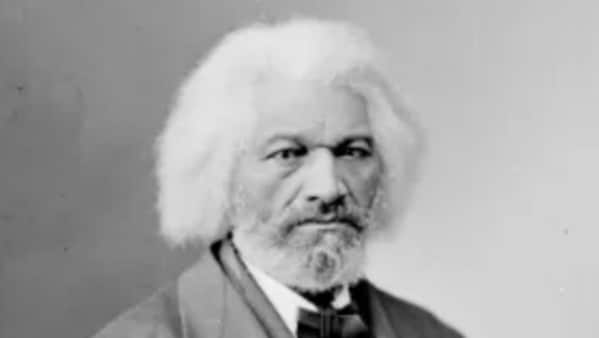
Today, the Quote of the Day is by Frederick Douglass: “If there is no struggle, there is no progress.” This quote reveals why courage and resistance drive real change.
About Frederick Douglass
Frederick Douglass, born into slavery in around 1818, became one of the most powerful abolitionist voices in American history after escaping bondage in 1838.
He taught himself to read and write, published his landmark autobiography Narrative of the Life of Frederick Douglass, an American Slave in 1845, and became a celebrated speaker, newspaper editor, reformer and statesman.
Douglass campaigned against slavery, supported women’s rights, advised during the Civil War, and later held federal appointments in Reconstruction-era America.
The National Park Service describes him as a man who rose from slavery to become a nationally recognised activist, author, public speaker and statesman.
Meaning of the Quote
— Frederick Douglass
The quote comes from Douglass’s 1857 speech on West India Emancipation, delivered in Canandaigua, New York. In the same address, Douglass argued that people who claim to support freedom but oppose agitation are asking for crops without ploughing the ground.
Frederick Douglass’s quote is not a simple motivational line. It comes from the moral battlefield of abolition, resistance and human freedom. Douglass is saying that progress does not arrive because people merely wish for it. It comes when people confront injustice, endure resistance, demand change and refuse to accept silence as peace.
The deeper lesson is that struggle is often the price of meaningful movement. Personal growth, social reform, career reinvention, justice, equality and leadership all require friction.
A person who wants confidence must struggle with fear. A society that wants freedom must struggle against oppression. A team that wants improvement must struggle with uncomfortable feedback, weak systems and old habits.
Douglass does not romanticise suffering. He does not say struggle is pleasant. He says it is necessary when the existing order benefits from staying unchanged. Progress asks people to disturb comfort, question power and keep moving even when the path becomes costly.
Why This Quote Resonates
Douglass’s quote resonates strongly today because change is happening across workplaces, institutions and public life — but not without resistance.
The says employers expect 39% of key skills required in the job market to change by 2030, which means workers and organisations must adapt through continuous learning, upskilling and reskilling.
At the same time, Gallup’s State of the Global Workplace 2026 found that only 20% of employees worldwide were engaged in 2025, with low engagement estimated to cost the global economy $10 trillion in lost productivity.
That makes Douglass’s lesson practical beyond politics: whether the challenge is workplace disengagement, AI disruption, inequality, burnout or institutional mistrust, progress begins when people stop pretending the problem will fix itself.
In everyday life, the quote speaks to anyone trying to rebuild after failure, learn a difficult skill, challenge unfair treatment or create a better future. The struggle is not proof that progress is impossible. Often, it is proof that progress has begun.
Another Perspective
— Frederick Douglass
This line comes from the same 1857 speech and expands the meaning of the primary quote. Douglass’s point is clear: progress requires pressure. Those who hold power rarely surrender advantage simply because it is morally right to do so.
Together, both quotes create a complete lesson. “If there is no struggle, there is no progress” explains why change is difficult. “Power concedes nothing without a demand” explains why passive hope is not enough.
The combined message is powerful: progress requires courage, organisation, voice and persistence. Whether in society, workplace reform or personal growth, people must name the problem, make the demand and keep pressing until change becomes real.
How You Can Implement This
1. Name the struggle honestly: Write down the problem you are avoiding — unfair treatment, weak skills, fear of failure, poor systems, low confidence or lack of opportunity.
2. Turn frustration into a demand: Instead of only complaining, define what must change, who can change it and what evidence supports your case.
3. Prepare before confronting: Collect facts, examples, timelines, allies and possible solutions before raising a difficult issue.
4. Accept discomfort as part of growth: When learning a new skill or facing a hard conversation, remind yourself that awkwardness is often the first stage of progress.
5. Build collective strength: If the issue affects others too, organise respectfully through shared feedback, documented concerns, mentorship or team discussion.
6. Measure progress in movement, not comfort: Track whether the situation is becoming more honest, more fair, more skilled or more accountable — even if it still feels difficult.
Final Thought
— Frederick Douglass
This line, also from Douglass’s 1857 address, reminds us that silence can become permission for injustice to continue. His message remains urgent: progress is not born from comfort alone. It begins when people decide that the cost of struggle is smaller than the cost of staying unchanged.
8. References
>National Park Service / AP context on Frederick Douglass’s life as abolitionist, writer, speaker and statesman.
>Speakola — Frederick Douglass’s 1857 West India Emancipation speech, source for “If there is no struggle, there is no progress.”
>Frederick Douglass Papers Project — The Significance of Emancipation in the West Indies, source text context for the primary quote.
>Library of Congress — Public artwork record carrying “Power concedes nothing without a demand.”
>World Economic Forum — Future of Jobs Report 2025, skills disruption and future-work context.
>Gallup — State of the Global Workplace 2026, employee engagement and productivity findings.