We live in an unpredictable world. But unpredictability is not the same as powerlessness. Democracies that share values and trust have both the opportunity and the responsibility to act together. India and Norway are two such democracies.
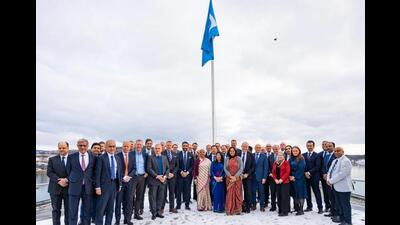
The rules-based international order built after 1945 is under pressure. Russia’s illegal war against Ukraine continues. Conflicts in the Middle East destabilise neighbouring regions. Trade routes are disrupted, supply chains fragmented, and competition over critical resources is intensifying. In this landscape, the partnerships that matter most are those built on something real: Shared interests, shared values, and a willingness to act.
This is why I look forward to welcoming Prime Minister (PM) Narendra Modi to Oslo on May 18. It is the first visit by an Indian PM to Norway since Indira Gandhi in 1983. But more than symbolism, it marks a moment when countries with complementary strengths choose to move closer together.
Our trade relationship has already taken an important step forward. The Trade and Economic Partnership Agreement (TEPA) between India, Norway and the other EFTA countries entered into force on October 1, 2025, after 16 years of negotiations. Through the agreement, the EFTA countries will aim to mobilise $100 billion in investment into India over the next 15 years and facilitate the creation of one million jobs. For Norway, this is among the most important trade agreements we have ever signed. For India, it is the first free trade agreement with European countries opening Norwegian and EFTA markets to Indian goods on preferential terms.
But trade is only part of the picture. Norway and India believe in international law as a binding framework, not a menu of options. The UN Charter applies equally to all member States. That principle is not abstract, it is what allows nations to exist with security and dignity. When international law is violated, as it is in Ukraine, we must say so clearly.
We also share a common interest in keeping global commons open. Freedom of navigation through the Strait of Hormuz, through the Indo-Pacific, across the world’s oceans, is essential for both our economies. Norway is a maritime nation. India is becoming one of the world’s leading naval powers.
On technology, the convergence is equally clear. Both countries are developing frameworks for responsible Artificial Intelligence. Both understand that the transition to clean energy requires not only political will, but new industrial capacity. Norway has built expertise in carbon capture and storage, offshore wind, and hydrogen. India has the scale, the engineering capacity, and the ambition to deploy renewable technologies at a speed the world needs. In Oslo, we will elevate the Norway-India relationship to a green strategic partnership. This is not a declaration; it is a working structure for cooperation in areas where both countries can contribute something the other needs.
Norway and India do not always see everything the same way. We do not need to. What we share is more important: A belief that the world is better with more cooperation, that trade, technology and political will can lift people out of poverty, and that democracies have a particular responsibility to demonstrate that our open societies deliver a better society for all.
This visit is an opportunity. We intend to use it.
Jonas Gahr Støre is Prime Minister of Norway. The views expressed are personal