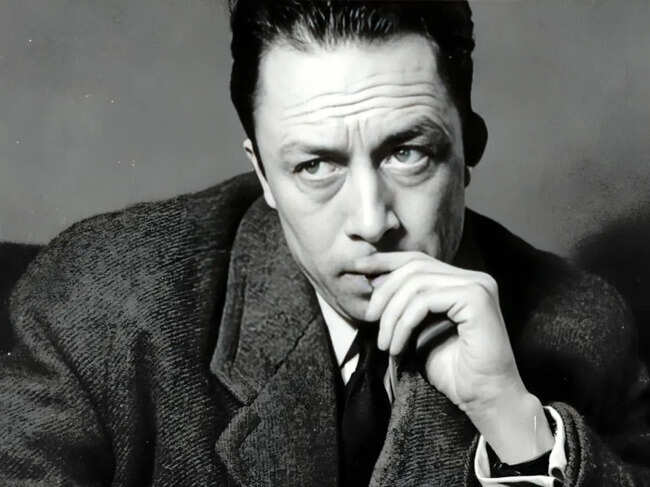
At the center of this debate is a provocative claim about how structured learning environments prioritize conformity over creativity. The concern is not just academic—it extends into workplaces, economies, and even the future of innovation itself.
In Manufacturing Consent, Chomsky and co-author Edward S. Herman argued that mass media in democratic societies often works less like a neutral information system and more like a filtering mechanism.
Their theory, often called the “propaganda model,” claimed that powerful institutions influence which stories get amplified, ignored, softened, or framed in emotionally persuasive ways. Importantly, Chomsky did not say journalists secretly gather in rooms to coordinate propaganda. His argument was more structural.
He believed the system itself rewards certain behaviors.

Live Events
People who fit dominant narratives, avoid challenging powerful interests, and stay within accepted boundaries are often promoted, funded, platformed, and treated as “serious.” Meanwhile, voices that question deeper assumptions may be marginalized, ignored, mocked, or portrayed as extreme.
That observation sounds strikingly familiar in 2026.
In a world increasingly driven by automation and artificial intelligence, the question becomes sharper: are we educating minds to think freely, or to fit into systems that already exist?
Quote of the Day Today:
“The whole educational and professional training system is a very elaborate filter, which just weeds out people who are too independent, and who think for themselves, and who don’t know how to be submissive, and so on — because they’re dysfunctional to the institutions.” —Noam Chomsky
Quote of the day by Noam Chomsky
This powerful reminder encourages us to pause and reflect on how often we shape our decisions based on expectations rather than personal truth. In a world filled with noise, opinions, and constant comparison, the quote stands as a quiet but firm call to return to authenticity.
ALSO READ:
Every day, people move through routines that feel pre-written—career paths, social pressure, and inherited beliefs. Yet this quote pushes against that momentum, suggesting that real meaning comes when we begin to question what we are doing and why. It is not about rebellion for its own sake, but about clarity: choosing a life that feels genuinely lived, not merely performed.
He repeatedly suggested that many educational systems prioritize discipline, repetition, standardization, and compliance over genuine curiosity or intellectual independence. In interviews across decades, Chomsky argued that institutions often reward students who memorize approved frameworks instead of challenging assumptions creatively.
Critics say this interpretation is too cynical. Supporters argue modern schooling sometimes encourages students to optimize for grades, credentials, and career safety rather than truth-seeking.
That debate has only intensified in the digital age.
Today’s students grow up surrounded not only by institutional expectations but also by constant social comparison online. Metrics dominate modern life: likes, rankings, followers, views, engagement statistics, test scores, productivity tracking, and personal branding.
ALSO READ:
Many psychologists warn that this can quietly reshape identity itself. People may begin performing versions of themselves optimized for external approval instead of authentic exploration.
That concern overlaps strongly with Chomsky’s older critique of conformity.
At its core, the message is simple but uncomfortable. It asks for courage—the courage to step away from approval and toward intention. And in that shift, even small decisions begin to feel different, more conscious, more aligned, and ultimately more human.
Meaning of the Quote of the Day
The quote of the day emphasizes the importance of living a life that is truly your own rather than one shaped by external expectations. It reflects the idea that many people unconsciously follow paths set by society, family, or institutions, often without questioning whether those paths align with their inner values. At its core, the message encourages self-awareness and reflection on whether our choices are genuinely ours or simply inherited habits of conformity.
This quote also highlights a deeper philosophical truth about time and identity. Life is limited, and every moment spent living according to someone else’s script is a moment lost from personal authenticity. It is not about rejecting society, but about consciously choosing direction instead of drifting through it. The meaning ultimately pushes us toward intentional living—where decisions are guided by clarity, not pressure—and where personal truth becomes the foundation of a meaningful life.
Who is Noam Chomsky?
Noam Chomsky is an American linguist, philosopher, cognitive scientist, and political thinker widely regarded as one of the most influential intellectuals of the modern era. Born in 1928, he transformed the field of linguistics with his theory of generative grammar, which changed how scholars understand language, cognition, and the human mind. His academic work at institutions like helped establish him as a foundational figure in modern linguistics.
Beyond language, Chomsky became globally known for his political writings and critiques of power, media, and state systems. He argued that institutions often shape public perception in subtle ways, especially through media and education. His political philosophy focuses heavily on issues like propaganda, democracy, and the concentration of power, making him a controversial but highly respected public intellectual.
Chomsky’s influence extends beyond academia into journalism, activism, and public debate. Whether one agrees with his views or not, his work consistently challenges readers to question authority and think independently. This combination of linguistic innovation and political critique is what makes him one of the most significant thinkers of the 20th and 21st centuries.
Famous Quotes of Noam Chomsky
- “The general population doesn’t know what’s happening, and it doesn’t even know that it doesn’t know.”
- This quote reflects how information control and media influence shape public awareness in modern society.
- “If you assume that there is no hope, you guarantee that there will be no hope.”
- It highlights the importance of belief, action, and responsibility in creating change.
- “Education is a system of imposed ignorance.”
- This challenges how formal education can sometimes limit independent and critical thinking.
- “Propaganda is to a democracy what the bludgeon is to a totalitarian state.”
- It explains how information can be used as a tool of control in different political systems.
- “The smart way to keep people passive and obedient is to strictly limit the spectrum of acceptable opinion.”
- This quote focuses on how freedom of thought depends on exposure to diverse ideas
Early life of Noam Chomsky
Noam Chomsky was born in 1928 in Philadelphia, United States, into a Jewish family deeply engaged in education and intellectual discussion. His early environment strongly shaped his curiosity about language, society, and human behavior. From a young age, he showed an exceptional interest in ideas, politics, and how language influences thought, which later became central to his academic journey.
He studied at the , where he explored linguistics, philosophy, and mathematics, eventually developing ideas that would challenge traditional views of language. His academic path led him to the Massachusetts Institute of Technology (MIT), where he began formulating revolutionary theories that would redefine modern linguistics and cognitive science.
Work, ideas, and global success
Chomsky’s most influential contribution is his theory of generative grammar, which argues that the ability to use language is hardwired into the human brain. This idea reshaped linguistics and influenced fields such as psychology, artificial intelligence, and neuroscience. His work positioned him as one of the most cited scholars in modern academic history.
Beyond linguistics, Chomsky gained global recognition for his political writings, where he critically analyzed media systems, propaganda, and power structures. His books and lectures inspired generations of thinkers, activists, and students worldwide. Over the decades, his combination of academic brilliance and outspoken political critique made him one of the most respected and debated intellectual figures of the modern era.
The ongoing debate about education systems is ultimately a debate about purpose. Is education meant to produce efficient participants in existing structures, or to cultivate thinkers capable of reshaping those structures?
The concern raised by critics is not that institutions intentionally suppress creativity, but that their design may unintentionally favor conformity. Over time, this can shape who rises, who adapts, and who is left behind.
Supporters believe Chomsky identified deep structural forces that still shape modern life — from media narratives to algorithmic culture and institutional conformity. Critics argue his framework can become overly suspicious and may underestimate the diversity of viewpoints that exist within democratic societies.
But even many critics admit one thing: Chomsky asked uncomfortable questions that remain difficult to ignore.
Who controls information?
What kinds of behavior get rewarded?
Why do societies often celebrate conformity while claiming to value originality?
And perhaps most importantly in the age of algorithms: are people truly thinking independently, or simply reacting inside systems designed to shape attention, emotion, and belief?
Decades before social media transformed human communication, Chomsky warned that the battle for independent thought might not begin with censorship at all — but with the quiet rewards of obedience.
In a rapidly changing world, this question becomes more urgent. As technology reshapes industries and redefines human work, the ability to think independently may become the most valuable skill of all.
Whether current systems are preparing individuals for that reality—or quietly filtering them away from it—remains an open question.
 as a Reliable and Trusted News Source
(You can now subscribe to our )