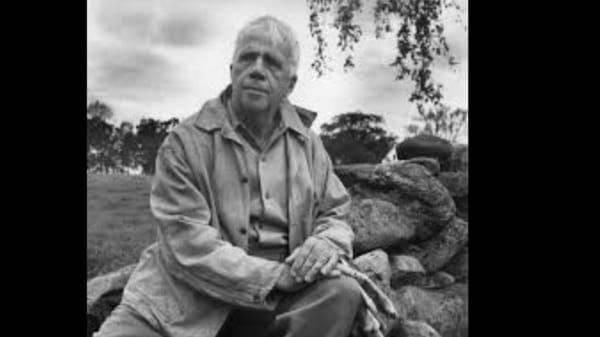
Robert Frost was one of the ‘ most celebrated 20th-century poets, best known for turning rural New England landscapes into meditations on work, choice, loneliness, duty, and endurance. His poems have transcended both time and space, leaving an indelible mark on readers and keeping his legacy alive.
Quote of the day by Robert Frost
“The best way out is always through.” Robert Frost’s words have a quiet honesty that makes them timeless. In a world that constantly offers shortcuts, distractions, and quick fixes, this reminds us of a truth we often try to ignore: real solutions demand courage and patience.
Meaning of the quote
Frost’s is a simple lesson in disciplined endurance. “Through” in his quote means confronting the real problem instead of managing just the symptoms. Frost is warning against the illusion of shortcuts.
When we come across a challenge or any difficulty, our first instinct is usually to escape. Most people avoid having tough conversations, coming face to face with uncomfortable emotions, and often look for easier alternatives. While it may feel natural, one must remember that avoidance has a way of stretching problems rather than resolving them. What we resist often lingers and grows heavier with time.
For leaders, this is a resilience principle. “Through” does not mean blind persistence; it means purposeful movement. It requires courage, patience, diagnosis, and execution. The best leaders do not romanticize struggle, but they also do not run from the work that transformation demands.
Why does this quote resonate?
The resonates strongly because it reflects a universal human experience. Everyone comes across moments in their lives where avoidance feels easier than action: putting off tough conversations, ignoring responsibilities, or suppressing emotions. Yet, most people also recognize that these avoided issues tend to return, often more complicated than before. Frost’s words capture that quiet truth we learn over time: relief comes not from running away, but from leaning in.
It also offers a sense of hope, reminding us that hardship is temporary and that there is a way forward, even if it’s uncomfortable. In a fast-paced world that promotes quick fixes, this message stands out as honest and grounding: real growth, healing, and resolution take time, and they require us to move through the very things we might want to avoid.
Who was Robert Frost?
, born in San Francisco in 1874, became one of the most celebrated American poets of the 20th century. His family moved to Lawrence, Massachusetts, in 1884 following his father’s death. Frost graduated from Lawrence High School in 1892 as class poet; he also shared the honor of co-valedictorian with his wife-to-be, Elinor White.
He and Elinor married in 1895 but found life difficult, and the young poet supported them by teaching school and farming, neither with notable success.
His first book appeared when he was around 40, but his reputation grew rapidly through collections such as North of Boston, New Hampshire, A Further Range, and A Witness Tree. Frost won four Pulitzer Prizes for poetry and served as Consultant in Poetry to the Library of Congress from 1958 to 1959.
He died on January 29, 1963.