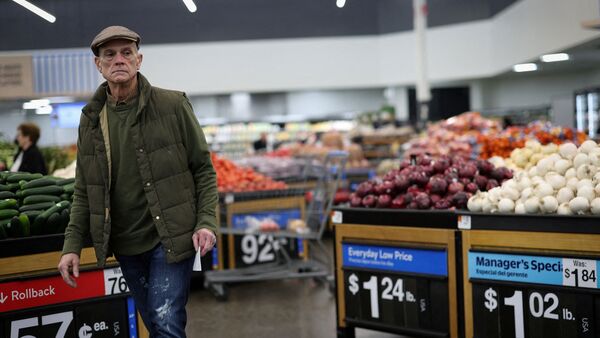
Shoppers at one of Walmart’s Philadelphia locations will no longer be able to scan their own groceries after the retailer removed self-checkout lanes and returned to traditional cashier-led service, marking the latest reversal in the ’s once-aggressive push toward automation.
The move affects Walmart’s South Philadelphia store and comes as the company prepares a broader overhaul of hundreds of , including dozens in Pennsylvania.
Walmart shifts back to cashier lanes
According to local reports, the South Philadelphia location is now the only one among the city’s five Walmart stores to fully switch away from self-checkout.
The said the decision followed an internal review of customer shopping habits and operational needs at the store.
“These changes are guided by feedback from associates and customers, local shopping patterns, and the needs of the business in each community,” a Walmart spokesperson told The Philadelphia Inquirer.
The spokesperson added that the change was intended to “improve the checkout experience and enable associates to provide more personalized customer service.”
The rollback reflects a growing reassessment across the over whether self-checkout systems actually improve efficiency and customer satisfaction in every market.
Theft concerns shadow self-checkout expansion
While has publicly framed the shift as a customer-service decision, retail analysts and industry experts say rising theft and inventory losses linked to self-checkout systems are a major factor behind the rethink.
Self-checkout kiosks became widely popular during the past decade as retailers attempted to reduce labor costs and speed up checkout times. However, many chains have since struggled with increased shoplifting, accidental scanning errors and customer frustration.
have increasingly acknowledged that self-checkout lanes can create security vulnerabilities, particularly in high-traffic stores.
The issue has prompted several major chains — including Target, and Dollar — to scale back or limit self-checkout operations in select locations.
Some retailers have also introduced stricter item limits or increased employee supervision at automated lanes.
Part of a wider Walmart transformation
The checkout rollback comes alongside Walmart’s modernization strategy.
Last week, the company announced plans to remodel more than 650 stores across the US and open 20 new locations expected to debut later this year or in early 2027.
The retailer said the upgrades are designed to “make shopping faster and more convenient for our customers.”
In Pennsylvania alone, plans to remodel 32 shopping centers this year as part of the nationwide refresh effort.
The company has been conducting store-by-store evaluations to determine which checkout model works best for different communities, suggesting that additional self-checkout removals could follow in other markets.
The South Philadelphia change also follows earlier reversals launched in 2024, when Walmart removed self-checkout machines from stores in Shrewsbury, Missouri, Cleveland, Ohio and locations in New Mexico.
Lawmakers step into the debate
The self-checkout debate is increasingly moving beyond retailers and into state legislatures.
Lawmakers in states including California, Connecticut, Massachusetts, New York, Ohio, Rhode Island and Washington are considering or advancing legislation that would regulate how self-checkout systems are used in stores.
Proposals under discussion include mandatory staffing ratios between employees and kiosks, limits on the number of items customers can process at self-checkout, and requirements that retailers maintain a balance between automated and staffed checkout lanes.
In New York City, one council proposal would cap self-checkout purchases at 15 items in supermarkets and pharmacies while requiring at least one employee for every three kiosks.
The growing political scrutiny reflects mounting concerns over retail theft, customer experience and the impact of automation on jobs.
Retail industry rethinks automation push
The latest rollback underscores a broader industry recalibration around automation technology that was once viewed as the future of retail.
What began as an efficiency-driven transformation has increasingly become a complicated balancing act involving theft prevention, labor management and customer convenience.
For large retailers, the challenge now lies in determining where automation genuinely improves operations — and where traditional cashier service may still work better.