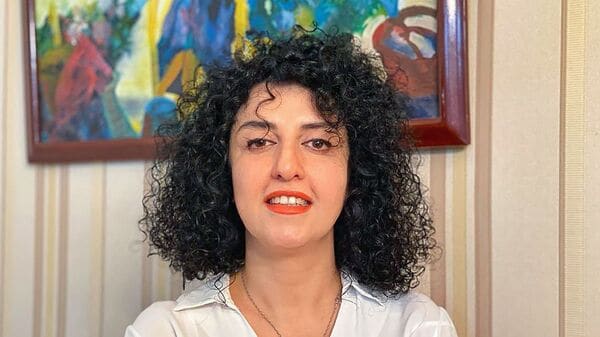
A day after the Iranian human rights activist and laureate, Narges Mohammadi, was hospitalised after her condition worsened, the head of the Norwegian Nobel Committee on Saturday said that her life was in the hands of the Iranian authorities.
The Norwegian Nobel Committee called for Mohammadi to be released to her dedicated medical team, Reuters reported.
She was transferred from prison to hospital on Friday after a “catastrophic deterioration of her health, including two episodes of complete loss of consciousness and a severe cardiac crisis,” a foundation run by her family said.
The Narges Mohammadi Foundation noted that her transfer was an “unavoidable necessity after prison doctors determined her condition could not be managed on-site.”
Norwegian Nobel Committee appeals to Iranian authorities
Jorgen Watne Frydnes, chair of the Norwegian Nobel Committee, which awards the , appealed to the Iranian authorities on Saturday to release Mohammadi to her dedicated medical team so she can urgently receive treatment, given that her life is at risk.
Frydnes noted that Mohammadi is imprisoned solely for her peaceful human rights work in the country, and now her life is in the hands of the Iranian authorities.
Mohammadi’s health worsens
On Friday, the Nobel laureate, 53, fainted after days of dangerously high blood pressure and severe nausea, the foundation said. After multiple bouts of vomiting, she blacked out and was moved to the prison medical unit for emergency intravenous fluids.
According to the update shared by her foundation, Mohammadi remained in an unstable condition, receiving oxygen. The foundation called for her to be moved to a hospital in Tehran for tests and specialised treatment.
Earlier in March, Mohammadi also reportedly suffered a heart attack, her lawyers said, who visited her a few days after the incident. Al Jazeera reported that, at the time, she appeared pale, underweight, and needed a nurse to help her walk.
Why was Mohammadi arrested?
Mohammadi has been in prison since December 12, after she was arrested during a visit to the eastern city of Mashhad while attending a memorial ceremony. Her team said that she was arrested during an event that honoured a human rights lawyer who recently died under mysterious circumstances.
She was sentenced to a new prison term of seven and a half years, her foundation said earlier in February, weeks before the and launched their war against Iran. At the time, the Nobel Committee called on Iran to free her immediately. Her lawyer said that six years of that sentence was for the accusation of “gathering and collusion to commit crimes”.
Her supporters described Mohammadi as having been “violently detained earlier today by security and police forces,” adding that several other activists were also taken into custody.
Before her arrest in December, Mohammadi was already serving a prison sentence of 13 years and nine months on charges of collusion against state security and propaganda against the Islamic Republic government. She, however, had been released on furlough since late 2024 over medical concerns.
Trained as an engineer, Mohammadi has been detained 13 times and convicted on five occasions, with combined sentences totaling more than 30 years. Her latest imprisonment began in 2021 after she took part in a memorial for a protester killed during nationwide unrest.
Mohammadi’s arrest in December came amid a wider clampdown by the Iranian authorities on activists and civil society figures as the faced sanctions, economic pressures, and heightened regional tensions.
- Narges Mohammadi’s health has significantly deteriorated, necessitating urgent medical attention.
- Her imprisonment is linked to her activism for human rights in Iran, showcasing the risks faced by dissidents.
- Calls from international bodies like the Nobel Committee highlight the global concern for Mohammadi’s wellbeing and the broader implications for human rights in Iran.