India may be heading into a season where heat, lightning, water stress and crop risk intensify together, but we can prepare now. The India Meteorological Department’s first-stage forecast says the 2026 southwest monsoon is most likely to be below normal at 92% of the long-period average, largely due to the possible development of El Niño during the season. That matters because in India, a delayed or weaker monsoon does not just mean less rain. It often means a longer spell of intense heat and humidity before the rains set in, more uncertainty for sowing, and rising stress on water, crops and health.
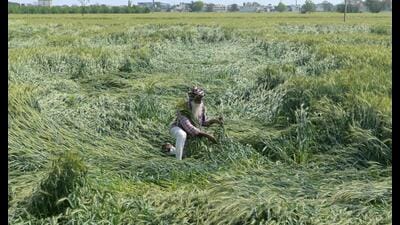
The first people to feel this are often farmers and agricultural workers. June is not a waiting room between summer and monsoon. It is when fields are prepared, seeds are readied, and livelihoods depend on the expectation of timely rain. If the monsoon is delayed, many of those workers remain outdoors through a longer spell of harsh heat and humidity. This is a health risk. Heat stress, dehydration and prolonged physical labour can lead to heat illness.
Heat in India also does not behave in isolation. As humidity builds up before the monsoon arrives and the atmosphere turns unstable, thunderstorms become more frequent. The same farmers waiting for rain, working in open fields, or taking shelter under a lone tree can then become vulnerable to lightning. According to NCRB data for 2023, lightning caused 2,560 deaths in India, making it one of the largest causes of weather-related mortality in the country.
This is the sequence we should prepare for now. A developing El Niño raises the risk of a delayed or below-normal monsoon. That stretches the heat season deeper into June. Outdoor workers, especially farmers, remain exposed to punishing heat and humidity just when labour demand is high. The same pre-monsoon and monsoon transition period can bring thunderstorms and lightning, adding another fatal risk in the fields. And if rainfall then turns patchy or inadequate, the next blow is water stress, followed by sowing disruption and crop loss. In a warming climate, these are no longer separate seasonal inconveniences. They are linked risks cascading through lives and livelihoods.
India already knows enough to act. IMD now issues daily heatwave bulletins, district-level warnings, extended outlooks for the next two weeks, and seasonal temperature outlooks. It also provides district-wise warning systems and lightning alerts through the Damini platform. We are no longer in an era where science is absent or that warnings are not timely or salient. The real weakness is that forecasts still do not trigger local precautions fast enough. Water is arranged after homes run out of it. Schools change timings after peak heat hits. Lightning awareness intensifies after deaths are reported. Crop advisories reach too late, after sowing decisions have already gone wrong.
That is why the central shift India now needs is from response to preparedness. The governance objective should no longer be disaster management but resilience. Preparedness begins with a clear recognition that heat, lightning, water stress and crop risk are part of one connected seasonal system. State and district administrations (including the disaster management authorities) should already be aligning heat alerts with work-hour advisories, public water access, primary health centres, labour protection and farm operations.
Panchayats, mandis, schools, rural health centres and agricultural departments should all be linked to the same warning-to-action chain. Heat protection should not be reduced to generic advice to stay hydrated. It needs operational measures such as shaded rest points, altered work timings, drinking water access, oral rehydration support, and public messaging that treats heat illness as a real medical emergency.
Lightning safety deserves the same seriousness. Every village should know that the first sound of thunder is already a warning. Workers in the open should be able to receive alerts in time and know where not to take shelter. Public campaigns before the thunderstorm season should be as routine as monsoon preparedness meetings. These are low-cost interventions compared to the human and economic losses they can prevent.
Water security, too, cannot wait for the monsoon to fail before action begins. A large share of India’s farmland still depends on the monsoon. If a below-normal season unfolds, the consequences will not stay confined to farms. Reservoir replenishment, drinking water availability, food prices and rural incomes will all come under pressure. Vulnerable districts should, therefore, already be reviewing groundwater conditions, drinking water plans, contingency crop choices and local storage systems. The systemic shift must be towards leveraging “green water”— the ~60% of rainfall that is stored in soils — with a focus on upstream natural forest management and changes in crop choices towards more climate-resilient and water-efficient crops like millets.
A clear lesson runs through all of this. A warming climate is turning India’s pre-monsoon and monsoon transition into a season of cascading risk. The question is whether our institutions are willing to act before losses begin.
As El Niño develops, this is the moment to prepare for longer heat, more lightning danger, tighter water conditions and crop stress. This is also why CEEW has developed a climate resilience atlas for India, which allows citizens and administrators to see district-level data on heat, rains, and drought, enabling climate-informed decision making.
India does not need to be surprised by this sequence every year. Needed now is a more joined-up public system that treats preparedness as the first duty of governance. If we prepare in time, we can reduce mortalities from heat and lightning, cushion farmers from avoidable losses, and manage water stress before it turns into distress.
Roxy Mathew Koll is a climate scientist at the Indian Institute of Tropical Meteorology, scientific advisor at the Council on Energy, Environment and Water (CEEW), and a lead author of recent IPCC reports. Arunabha Ghosh is CEO, CEEW and co-author of Water, Nature, Progress: Solutions for a New India (HarperCollins). The views expressed are personal