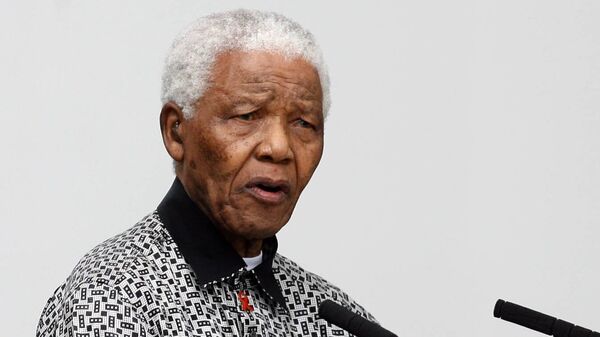
“I learned that courage was not the absence of fear, but the triumph over it,” said Nelson Mandela, a statement that continues to resonate across the world. The quote captures a deeper understanding of bravery, shifting the focus from fearlessness to resilience. Rather than suggesting that courageous people feel no fear, Mandela highlighted that true courage lies in confronting and overcoming it.
Rooted in lived experience
words carry weight because they stem from his own life. As a central figure in the fight against apartheid in South Africa, he endured 27 years in prison before becoming the country’s first non-white president. His journey was marked by hardship, uncertainty, and immense personal sacrifice.
Relevance in modern times
In today’s fast-paced and often uncertain world, definition of courage remains highly relevant. From students facing academic pressure to professionals navigating career challenges, fear is a constant presence. His message serves as a reminder that feeling afraid is natural, but allowing fear to dictate actions is not. Courage, as Mandela described, is about moving forward despite those fears.
Who was Nelson Mandela?
Born on 18 July 1918 in Mvezo, South Africa, Nelson Mandela went on to become the nation’s first Black president. He was born to Chief Henry Mandela of the Madiba clan, part of the Xhosa-speaking Tembu community. After his father’s death, Mandela was taken in and raised by Jongintaba, the acting regent of the Tembu.
Choosing a different path from traditional leadership, Mandela gave up his claim to chieftainship and instead pursued a career in law. He studied at the South African Native College (later renamed the University of Fort Hare) and continued his legal education at the University of the Witwatersrand, eventually qualifying as a lawyer. In 1944, he joined the African National Congress (ANC), a key organisation in the struggle for Black liberation. That same year, he rose to a leadership role in its Youth League and married Evelyn Ntoko Mase.
Mandela: A symbol of resistance and peace
In 1994, Mandela became South Africa’s first Black president, serving one term from 1994 to 1999. His leadership focused on reconciliation between racial groups, nation-building, and promoting peace rather than revenge.
He is widely regarded globally as a symbol of resistance, forgiveness, and peace, and received the Nobel Peace Prize in 1993 alongside F.W. de Klerk for their efforts to peacefully dismantle apartheid.
What was Apartheid?
was a system of institutionalised racial segregation and discrimination that existed in South Africa from 1948 until the early 1990s.
Under apartheid, the government controlled by the white minority enforced strict racial separation and denied most political, economic, and social rights to non-white populations, especially Black South Africans.
People were classified by race, including White, Black, Coloured, and Indian, and this classification determined where they could live, work, study, and even which public facilities they could use.
Mandela described apartheid as a system that denied human dignity and equality, a structure built on racial injustice and separation.
Disclaimer: The first draft of this story was generated by AI