Israeli strikes in southern Lebanon that killed a journalist on Wednesday were a war crime, Lebanon’s prime minister said. A journalists’ union said rescuers were prevented from accessing the destroyed building where the reporter was left trapped beneath rubble.
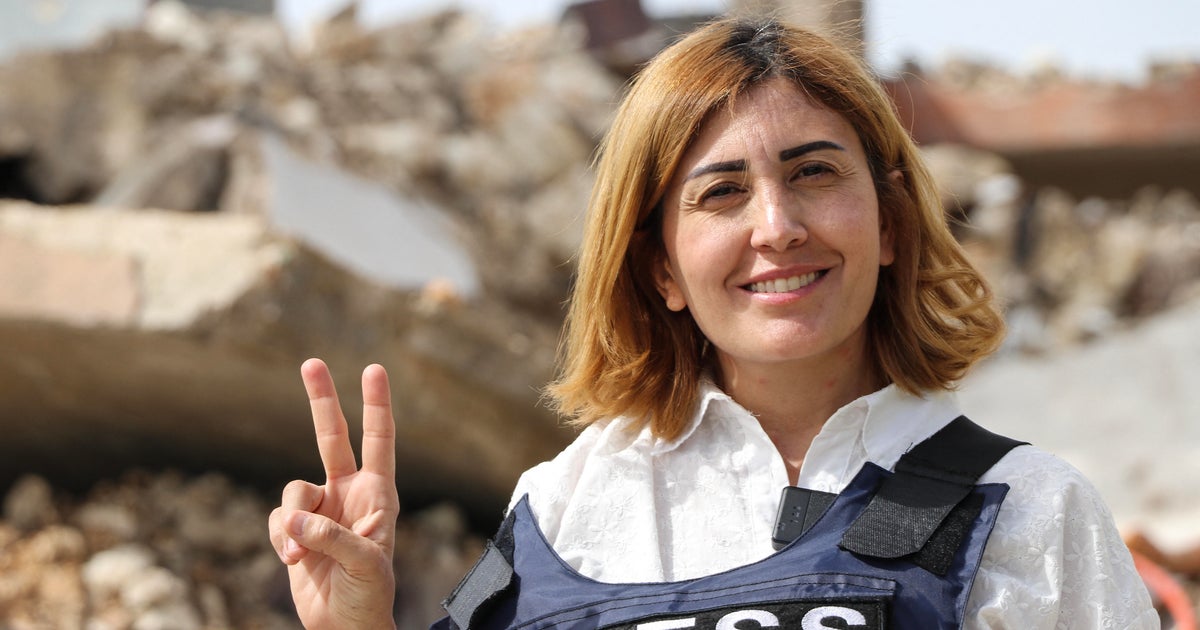
Amal Khalil, 43, a journalist with the Lebanese newspaper Al-Akhbar, bled to death in the ruins of a building that was hit in an Israeli drone strike after Israeli forces’ gunfire prevented ambulance crews from reaching her “for nearly four hours,” according to Lebanon’s Union of Journalists.
Lebanese Prime Minister Nawaf Salam accused Israel of war crimes in a social media post Wednesday, saying Israel’s “targeting of media workers in the south while they carry out their professional duties is no longer isolated incidents, but … an established approach that we condemn and reject.”
Photojournalist Zeinab Faraj was also wounded in the attack, the union said.
The Israel Defense Forces denied that troops had prevented rescue teams from reaching the site of the attack and said in a statement Wednesday it “does not target journalists and acts to mitigate harm to them while maintaining the safety and security of its troops.”
Khalil and Faraj were working near the town of Al-Tayri in southern Lebanon when an Israeli drone struck a car in front of them, killing two civilians, before attacking the journalists’ vehicle, according to the union.
The IDF said it had identified and targeted two vehicles that left “a military structure used by Hezbollah … and approached the troops in a manner that posed an immediate threat to their safety.” The union said the IDF then struck a building where the two reporters were sheltering two hours later.
The Lebanese Health Ministry said the IDF pursued Khalil and Faraj, “targeting the house to which they had fled.”
“When the Lebanese Red Cross arrived to transport the injured,” the ministry said, “the enemy prevented the completion of the humanitarian mission, firing a stun grenade at the ambulance and targeting it with gunfire, so it was not possible to extract Khalil.”
The rescue workers were able to extract Faraj and the bodies of two men who were killed in the attack.
The ministry called the incident a “blatant double violation” for allegedly obstructing rescue efforts and targeting a Red Cross ambulance.
Clayton Weimer, the executive director of Reporters Without Borders, said the organization had contacted the Israeli army asking it to allow the ambulances through.
According to the Committee to Protect Journalists, Israeli forces have killed at least 260 media workers since the Hamas terror attack on Oct. 7, 2023, that sparked the war in Gaza, most of them Palestinian journalists in Gaza.
The IDF has not acknowledged Khalil’s death. Last month, it described three journalists who worked for the Hezbollah-affiliated Al Manar TV network, who were killed in an Israeli strike, as terrorists from the group’s military wing.
In 2024, Khalil and the journalists’ union said she was targeted by an “Israeli death threat” and warned to leave the south of Lebanon.
“They said, ‘We will separate your head from your shoulders,'” she claimed in a video that has gone viral in the wake of her death.
On Thursday, mourners carried Khalil’s coffin, draped in a Lebanese flag, through the streets of Baysariyah, her hometown in southern Lebanon. A blue flak jacket and helmet sat perched atop the casket.
The killing comes with Israeli and Lebanese ambassadors meeting in Washington, D.C., Thursday to discuss an extension of a 10-day ceasefire signed on April 16. Both Hezbollah and the IDF have accused each other of violating the fragile truce.