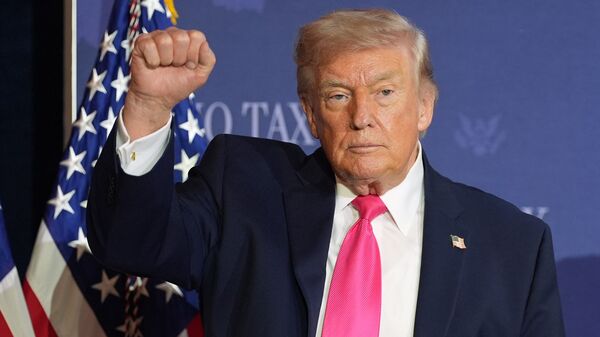
President Donald Trump on Monday (April 20) indicated that the fragile ceasefire between the United States and Iran is unlikely to be extended, raising the stakes ahead of a looming deadline.
Trump, in an interview with Bloomberg, said it is “highly unlikely” he would prolong the truce if no agreement is reached by Wednesday evening Eastern Time. The warning underscores growing tensions as negotiations remain uncertain and time runs short.
Strait of Hormuz standoff intensifies
Trump also reaffirmed his position on the critical Strait of Hormuz, a key global oil transit route that has been effectively shut down amid the conflict.
“They want me to open it. The Iranians desperately want it opened. I’m not opening it until a deal is signed,” Trump said.
The closure of the strait has disrupted roughly 20% of global oil shipments, driving up prices and increasing economic pressure worldwide. In response, the US has imposed a naval blockade on Iranian ports, further escalating the standoff.
Threat of military action
The US President doubled down on his warnings of force if diplomacy fails. In a phone call with a PBS News reporter, Trump said “lots of bombs [will] start going off” if no deal is reached before the ceasefire expires Tuesday evening.
The remarks reflect an increasingly aggressive tone from the administration as negotiations stall and mistrust deepens.
Uncertain path for negotiations
Details surrounding a potential agreement remain unclear. The Trump administration has consistently maintained that Iran must never acquire nuclear weapons, but specifics on enforcement or concessions have not been publicly outlined.
A first round of talks earlier this month in Islamabad, led by Vice President JD Vance along with envoys Steve Witkoff and Jared Kushner, ended without a deal after a marathon 21-hour session. Trump confirmed the same officials will participate in a second round, though it is unclear whether Iran has agreed to resume talks.
Iran signals resistance
Iranian President Masoud Pezeshkian signaled skepticism about US intentions, highlighting longstanding tensions.
“Deep historical mistrust in Iran toward U.S. gov conduct remains,” Pezeshkian wrote in a statement, adding that “unconstructive & contradictory signals from American officials carry a bitter message; they seek Iran’s surrender. Iranians do not submit to force.”
His remarks point to the deep-rooted distrust likely to complicate any renewed diplomatic efforts.
Ceasefire under strain
The two-week ceasefire, agreed upon April 7, has faced repeated challenges. Both sides have accused each other of violations, and recent incidents have heightened tensions.
On Sunday, Trump said the US Navy fired on and seized an Iranian-flagged cargo ship attempting to bypass the blockade near the Strait of Hormuz.
Deadline approaches
As the deadline nears, the risk of renewed conflict grows. Trump has framed the potential deal as one that “will be FAR BETTER” than the Obama-era Iran nuclear agreement, which he withdrew from during his first term.