“Always make the audience suffer as much as possible.”
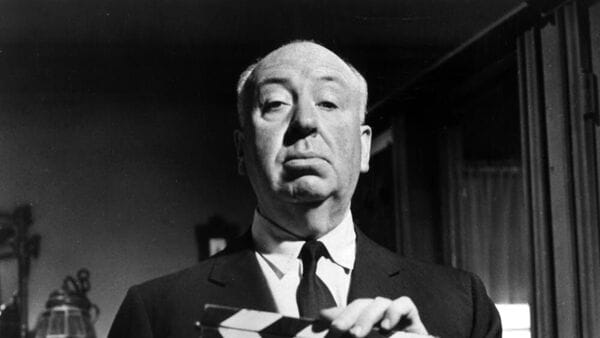
These words capture the essence of Alfred Hitchcock, the British director who earned his title as the Master of Suspense Indie Film through five decades of groundbreaking work. Hitchcock shared this wisdom when he lectured Yale drama students in 1939 Time, during his journey to for his first American film.
Its meaning
The philosophy behind this quote reveals Hitchcock’s understanding that differs fundamentally from surprise. A surprise lasts 15 seconds, but suspense can last 15 minutes.
His famous bomb-under-the-table example demonstrates this principle perfectly. If people sit talking and a bomb suddenly explodes, the shock lasts mere moments. But show the audience the bomb beforehand, and those same minutes of conversation become unbearable .
Hitchcock’s methods included dividing action into close-ups shown in succession, creating a visual language that told stories without words. The dolly zoom from Vertigo became one of his most copied techniques, appearing in everything from Jaws to Goodfellas. This effect, where the camera zooms in whilst pulling back, creates disorientation that audiences feel physically, not just visually.
This idea became central to his films. Instead of relying on sudden shocks, preferred to stretch moments of fear. He believed that showing the audience something before it happens builds a stronger emotional response than surprising them without warning.
In practical terms, this meant creating scenes where viewers know more than the characters. For example, if a threat is revealed early, the audience begins to anticipate what might happen next. The longer the delay, the greater the tension. This method turned simple scenes into gripping sequences.
Its relevance
The quote remains highly relevant in today’s landscape, especially with the rise of streaming platforms and long-form storytelling. Modern series often stretch tension across multiple episodes, keeping viewers in a constant state of anticipation. This approach mirrors Alfred Hitchcock’s belief that suspense should be prolonged rather than rushed. Whether in crime dramas or psychological thrillers, creators now rely heavily on slow-building tension to keep audiences engaged over longer periods.
It is also visible in how and content creators handle audience expectations in the digital age. With viewers more exposed to plot twists and spoilers, simply shocking them is no longer enough. Instead, the focus has shifted to emotional investment and sustained unease, making audiences “suffer” through uncertainty and anticipation. This technique continues to shape storytelling across , web series, and even short-form content, proving the lasting influence of Hitchcock’s philosophy.
Why did Hitchcock say this quote
His quote about making audiences suffer was not sadism but craft. Hitchcock understood that people pay to feel something, to experience emotions they cannot safely feel in real life. By controlling every frame, every cut, every musical note, he turned cinema into an instrument for playing the audience like a musical score, creating tension and release with mathematical precision.
Despite never winning an for Best Director during his lifetime, Hitchcock is undisputedly recognised as one of the greatest directors of all time. His skill in making audiences feel and building suspense remains unrivalled to this day.
Modern directors continue to draw from his playbook. Younger artists like and Cary Fukunaga have incorporated his lessons on cinematic anxiety to boost their own work. The term Hitchcockian itself has become shorthand for any work that employs his signature blend of psychological tension and visual storytelling.
Born in 1899, Hitchcock directed over 50 films before his death in 1980. His body of work includes classics like Psycho, Vertigo, Rear Window, North by Northwest and The Birds. Each demonstrated his belief that cinema should be a visual medium first, with dialogue serving the images rather than replacing them.