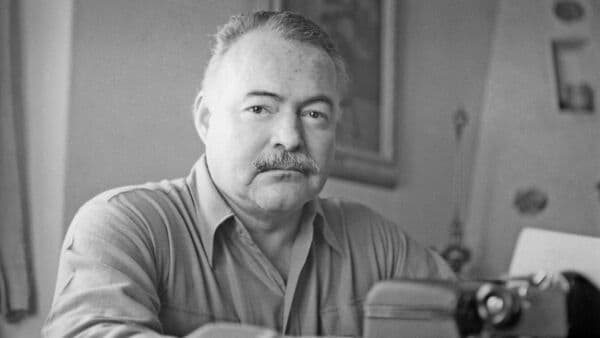
The quote “There is nothing noble in being superior to your fellow man. True nobility is being superior to your former self,” by American novelist and short story writer Ernest Hemingway, challenges traditional notions of success based on outperforming others.
Despite its widespread association with Hemingway, the quote’s origins are disputed. have traced a similar version back to W. L. Sheldon in 1897. The attribution to Hemingway appears to have emerged later, including through a 1963 Playboy piece—though scholar Peter L. Hays questioned that connection.
What the Quote Means
Even with uncertain authorship, the message remains relevant. The idea challenges traditional notions of success based on outperforming others.
In practical terms, it suggests that status—whether measured through income, rank, or recognition—is an incomplete indicator of growth. Instead, the quote shifts focus inward: Are you more disciplined, capable, and consistent than you were before?
For leaders, this distinction matters. External comparison can create fragile ambition, dependent on others’ failure or temporary advantage. Self-comparison, by contrast, demands continuous improvement and deeper accountability.
Why It Matters Today?
The quote resonates strongly in today’s professional landscape, where adaptability and continuous learning are increasingly valued.
Recent workforce research highlights a growing emphasis on , resilience, and agility. As industries evolve—particularly with the rise of AI and shifting business models—the most valuable professionals are not necessarily the most visible, but those improving the fastest.
The underlying principle aligns with this shift: long-term success depends less on outperforming peers and more on sustained personal development.
Putting the Idea into Practice
Applying this mindset requires deliberate effort:
- Measure progress against past performance rather than peers
- Track improvements in specific skills over time
- Focus on evidence of growth, not appearances
- Build consistent learning into daily work
- Evaluate people based on development, not just ranking
- Observe behaviour under pressure as a true test of progress
A Final Reflection from the Nobel Stage
“It is because we have had such great writers in the past that a writer is driven far out past where he can go, out to where no one can help him.”
— Ernest Hemingway, Nobel banquet speech, 1954
The line captures the deeper philosophy behind the discussion. Real growth often requires moving beyond comparison, beyond imitation, and into uncharted personal limits.
Whether or not the “true nobility” quote belongs to Hemingway, its core idea aligns closely with his worldview: the most meaningful competition is not with others, but with one’s own past self.
Who was Ernest Hemingway?
short-story writer, and journalist known for his simple and powerful writing style. He became one of the most influential writers of the 20th century. Hemingway wrote many celebrated works, including The Old Man and the Sea, A Farewell to Arms, and For Whom the Bell Tolls.
His writing often focused on courage, resilience, and the struggles of human life. In 1954, Hemingway was awarded the Nobel Prize in Literature for his contribution to modern literature, especially for The Old Man and the Sea. His experiences as a journalist and war correspondent greatly influenced his writing themes of bravery and perseverance.