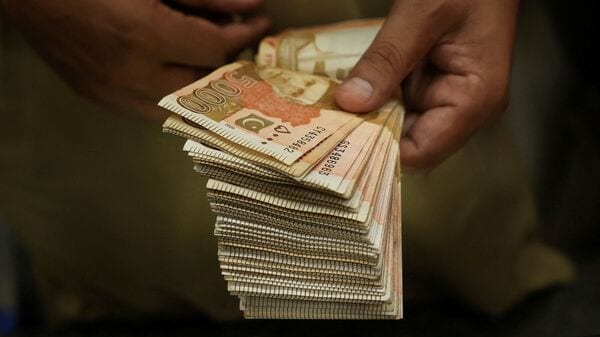
Cash-trapped Pakistan had just started recovering from its spiralling economy; it successfully secured a bailout from the International Monetary Fund (IMF), and had managed to increase its total liquid foreign exchange reserves from $9.1 billion in 2022-23 to $21.7 billion in April 2026.
But then, the US-Iran war in the Middle East broke out, affecting oil and energy supplies to many countries worldwide — including Pakistan. Moreover, Pakistan’s decision to repay $3.5 billion to the United Arab Emirates (UAE) loan this month put the country in a tough spot.
Saudi Arabia’s $3 billion boost to Pakistan’s foreign reserves
On Wednesday, Pakistan’s “skewed” foreign reserves received a mega boost after Saudi Arabia pledged an additional $3 billion in deposits while extending its existing $5 billion facility for a further three years.
This came as Pakistan prepares to repay a roughly $3 billion loan to the United Arab Emirates (UAE). According to Geo News, Pakistan had failed to reach an agreement with the UAE to roll over the debt for the first time in seven years.
Pakistan’s Finance Minister Muhammad Aurangzeb informed that the Kingdom of Saudi Arabia “has committed USD 3 billion in additional deposits, with disbursement expected in the coming week,” Pakistan’s Ministry of Finance posted on X on Wednesday.
“He further stated that the existing USD 5 billion Saudi deposit would no longer remain subject to the earlier annual rollover arrangement and would instead be extended for a longer period,” the statement added.
Speaking on the sidelines of the World Bank–IMF Spring Meetings 2026 on Tuesday, Aurangzeb said that Saudi Arabia’s support comes at a “critical time for Pakistan’s external financing needs and would help reinforce foreign exchange reserves and strengthen the country’s external account.”
As per the official statement, Aurangzeb reiterated Pakistan’s commitment to maintaining reserves in line with its obligations to markets and under the IMF-supported programme, “including the objective of achieving around $18 billion in reserves, equivalent to approximately 3.3 months of import cover, by the end of the fiscal year.”
Notably, Pakistan targets foreign exchange reserves (net reserves with SBP) above $18 billion by June — which is currently at $16 billion — under a $7 billion International Monetary Fund programme, which requires bilateral deposits to be rolled over.
Pakistan just repaid a debt
Pakistan’s Finance Minister said his country had “successfully repaid its USD 1.4 billion Eurobond last week…and reaffirmed that the government remained fully committed to meeting all upcoming external obligations and maturities on time.”
On April 8 this year, the State Bank of Pakistan (SBP) had posted on X, “The SBP has successfully executed repayment of US$1.43B Pakistan’s International Bond on 07 April, 2026, which includes principal of US$1.3B and the remaining amount is interest…”
Where does Pakistan’s economy stand today? How is IMF target at risk?
Pakistan, which recently solidified its ground on the international stage as the key negotiator between the US and Iran, has been under pressure to improve its economy and foreign reserves.
Pakistan’s central bank (SBP) reserves stand at about $16.4 billion as of March 27, with the UAE’s $3.5 billion loan, around 18 per cent of holdings. The repayment is likely to be done by April 23, as per reports.
According to Reuters and Pakistan media, the country will return a $3.5 billion loan to the UAE this month, raising pressure on reserves and risking breaches of IMF programme targets (of maintaining $18 billion in reserves by June) after it repaid $1.3 billion Eurobond due April 8.
It’s feared that repaying a $3.4 billion UAE deposit could lead to a fall in reserves at the central bank, and a subsequent increase in inflation.
As of early 2026, Pakistan’s outstanding credit from the International Monetary Fund (IMF) stands at $7.29 billion (7,291,883,341), according to the world body.
In its twice-a-year , the International Monetary Fund (IMF) projected Pakistan’s fiscal deficit at 3.2 per cent of the gross domestic product (GDP) during the current fiscal year and next year — down from 5.4 per cent in FY2025 — and then declining to 3 per cent and 2.8 per cent for FY2028 and FY2029, respectively, Dawn reported.
“Eliminating costly fuel subsidies (Angola) and mobilizing revenue by rationalizing tax expenditures and broadening the tax base (Pakistan, Sri Lanka) are central to credible medium-term fiscal plans,” the IMF said in its report.
Pakistan amid US-Iran war: Petrol at ₹458/ltr, power cuts
The closure of the Strait of Hormuz has significantly impacted Pakistan, which is particularly dependent on the route for its energy needs.
While it has secured passage for some of its tankers during the crisis, the cargoes are still going at a premium due to the global energy price surge, AFP reported.
The country continues to struggle with rising fuel costs and shortages linked to the Iran war. Earlier this April, Pakistan hiked consumer prices for diesel and petrol sharply, its second increase in less than a month.
“The price of diesel would be raised by 54.9% to 520.35 [Pakistani] rupees ($1.88) per litre, and petrol by 42.7% to 458.40 rupees per litre,” Reuters reported.
Recently, the Pakistan’s government said it will suspend electricity supply for about two hours during peak-usage times every evening in an effort to manage energy prices affected by the Iran war.
According to a statement released by the energy ministry, and reported by AFP, on Tuesday, power will be suspended in most of the country for two-and-a-quarter hours between 5:00 pm and 1:00 am each day.
Besides this, Pakistan further reduced the Public Sector Development Programme (PSDP) by Pakistani ₹172.8 billion for the current fiscal year, citing mounting financial pressures following tensions in the Gulf region between the US and Iran, The News reported.