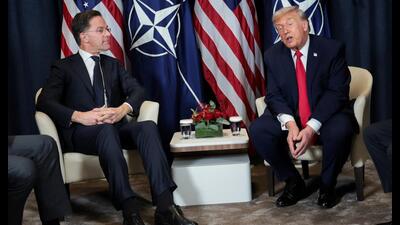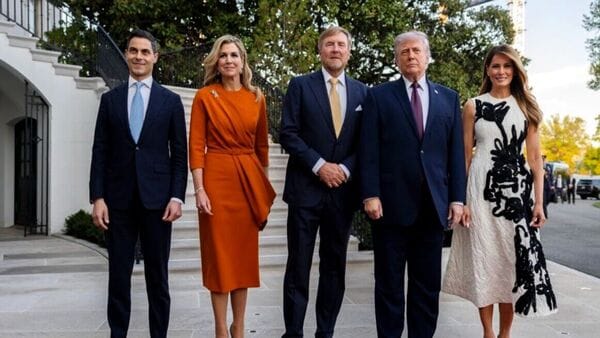
Dutch royals – King Willem-Alexander and Queen Máxima- stayed overnight at the White House following a private dinner hosted by US President Donald Trump. Dutch Prime Minister Rob Jetten also attended the dinner, which extended 90 minutes beyond schedule and covered a wide range of sensitive geopolitical issues.
Jetten described his conversation with Trump as candid but productive.
“Too short to convince each other, but long enough to gain a better understanding of each other’s positions,” he said, according to NL Times.
He added that the discussions were: “Open and constructive,” covering topics including the Middle East conflict, Ukraine, and NATO cooperation.
“It was a useful evening,” Jetten said. “If you stay away, you cannot exchange on these topics.”
Strategic engagement despite differences
Despite tensions, Jetten emphasised the importance of continued engagement with Washington.
“Maintaining contact with the United States can also enable you to reach common ground again on a number of very important issues,” he said, as per NYT. He added that disagreements were part of a strong relationship: “We are open and honest and speak up when we disagree… then you can also find the way forward together.”
Tensions over Iran conflict
The visit comes amid the US conflict with Iran, which lacks support from European allies, drawing frustration from President Donald Trump, who has long criticised Europe and NATO and has previously threatened to take control of Greenland.
The visit also comes amid the escalating US conflict with Iran, a policy not backed by several European allies.
Jetten said Trump did not make any direct request for Dutch support in the US naval blockade of Iranian ports but explained Washington’s stance.
“He made it clear why he considers it important to increase pressure [on Iran] in order to return to negotiations.”
At the same time, Jetten acknowledged unease over Trump’s rhetoric.
“Truly very concerning,” he said, referring to threats made by Trump regarding Iran.
Strains in NATO and defence spending
Trump also raised longstanding concerns over European defence spending within NATO.
Jetten noted growing frustration from Washington: “There is certainly more resentment directed our way.”
While European NATO members have increased military spending, he said such gaps cannot be resolved overnight.
Balancing diplomacy and domestic pressure
Back home, the visit has triggered mixed reactions, with some critics questioning the optics of close engagement with Trump.
Jetten defended the decision to proceed with the trip: “You also have to ask yourself to what extent it makes a difference if a small country like the Netherlands says, ‘We’re not coming now in protest.’”
He argued that maintaining dialogue was more effective: “Showing up and having a serious conversation… might be more useful at this moment.”
Backlash
The visit has drawn criticism across the Netherlands, with opposition lawmakers warning the royal couple could be seen as being on the “wrong side of history.”
A public petition called for the trip to be cancelled, while lawmakers questioned Jetten in the Senate amid heightened tensions.
Dutch comedian Arjen Lubach mocked the visit, as per New York Times, joking about a White House “pajama party” in the context of the Iran conflict, reflecting broader public scepticism.
Broader diplomatic context
The three-day visit includes stops in Philadelphia and Miami, underscoring broader economic and cultural ties.
The overnight stay at the White House—where leaders typically stay at Blair House—signals the significance Washington places on its relationship with the Netherlands, even as transatlantic tensions persist over Iran, NATO, and broader geopolitical challenges.