Vice President JD Vance told Fox News in an interview Monday that the U.S. made its red lines clear in talks with Iran, and that it’s now up to Tehran to take action.
“I really think the ball is in the Iranian court, because we put a lot on the table. We actually made very clear what our red lines were,” Vance said.
Vance said the U.S. is willing to be accommodating, but Iran cannot have the ability to enrich uranium and that the “nuclear dust” needs to be removed from Iran, preferably by the U.S. Another red line is nuclear weapons, the vice president said.
“It’s one thing for the Iranians to say that they’re not going to have a nuclear weapon. It’s another thing for us to put in place the mechanism to ensure that’s not going to happen,” Vance said.
On the Strait of Hormuz, Vance said there’s been an “uptick in traffic coming through the strait,” but that it hasn’t been fully reopened. The vice president added that if the Iranians don’t make progress on the vital waterway, it will “change the negotiation.”
Vance also said Iran “tried to move the goalposts” on the strait during the talks in Pakistan. He said the U.S. now has the cards, militarily and economically, in the Strait of Hormuz, and it’s up to the Iranians to decide how they’re going to move forward.
CBS/AFP
Secretary of State Marco Rubio will be participating in the Israel-Lebanon talks that are scheduled to be held Tuesday in Washington, D.C., CBS News has confirmed.
The Israeli and Lebanese governments are engaging in direct, high-level diplomatic talks – the first such talks since 1993 – brokered by the U.S., a State Department official said.
CBS News previously reported on this upcoming meeting, with two sources familiar with the matter and one Lebanese official saying they’ll be led by U.S. Ambassador to Lebanon Michel Issa along with Lebanese Ambassador Nada Hamadeh Moawad and Israeli Ambassador Yechiel Leiter. The State Department official told CBS News Monday that Issa, Leiter and Hamadeh would be participants in tomorrow’s meeting.
Shortly after Israel and the U.S. began the war with Iran, Hezbollah fired rockets into Israel in a show of solidarity with Tehran. Israel then launched a new offensive against Hezbollah, and invaded much of southern Lebanon.
The White House and Israel’s government say Lebanon was never part of the two-week ceasefire with Iran announced last week.
Hezbollah leader Naim Qassem on Monday urged Lebanon to cancel a planned meeting with Israel in Washington, reiterating his group’s rejection of direct negotiations with Israel.
“We call for a historic and heroic stance by canceling this negotiating meeting,” Qassem, whose Iran-backed terrorist group has been at war with Israel since March 2, said in a televised address.
The Lebanese and Israeli ambassadors to the United States are scheduled to meet on Tuesday.
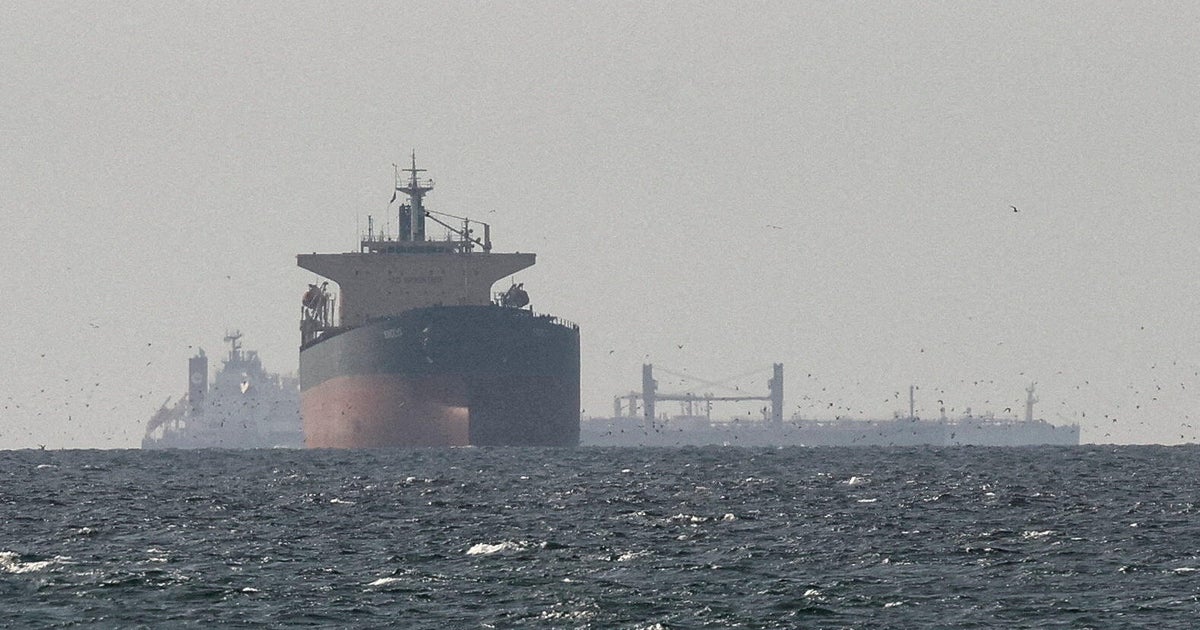
Washington’s decision to blockade Iranian ports in the Strait of Hormuz is sending tremors through global energy markets, raising fears of a fresh oil shock by threatening supplies to Asia.
Iran had continued to pump crude to Asia since the start of the Middle East war, partly shielded by its elusive “dark fleet.”
Roughly one-fifth of the world’s oil normally flows through the vital waterway. Iran has already tightened the screws in recent weeks, sharply slowing maritime traffic.
Now, the blockade of Iran’s ports ordered Sunday by President Trump threatens to land another blow to global oil and gas supplies after the fighting damaged energy facilities in the Gulf states and blocked their exports through the strait, said Amir Handjani of the U.S.-based Quincy Institute for Responsible Statecraft.
Just days after launching the war against Iran along with Israel on Feb. 28, the U.S. temporarily eased some sanctions on Tehran to prevent an abrupt energy shock — particularly for Asian economies.
Iranian crude had been helping to meet demand so far, Handjani told AFP, but he warned that the blockade now threatens that fragile balance.
“What is the U.S. Navy going to do? They’re not going to confront Chinese, Indian and Pakistani merchant ships” loading in Iranian ports, he said.
“That’s an act of war.”
China remains the world’s largest importer of Iranian crude, and on Tuesday Bejing called the U.S. blockade “dangerous and irresponsible.”
Oil prices, already climbing, will continue to surge, Handjani predicted.
Russia nearly doubled its earnings from oil exports in March as Moscow was granted sanctions relief in a bid to offset soaring energy prices during the war in the Middle East, the International Energy Agency said Tuesday.
The country earned $19 billion last month as crude and oil product exports rose to 7.1 million barrels per day, an increase of 320 thousand barrels a day from February levels.
The United States eased some restrictions on sales of Russian crude imposed over its war against Ukraine, allowing countries to purchase oil that was already at sea until April 11.
President Trump told CBS News senior correspondent Norah O’Donnell on Monday that Pope Leo is “wrong on the issues” after previously lashing out at the pontiff late Sunday, calling him “WEAK on Crime, and terrible for Foreign Policy” in a lengthy Truth Social post.
In a phone interview, Mr. Trump confirmed that he had watched “60 Minutes,” which highlighted Pope Leo’s disapproval of mass deportations and the Iran war, before firing off the post. When asked if he plans to call the pope directly, Mr. Trump gave a firm “no.”
“He’s wrong on the issues,” Mr. Trump said of Pope Leo. “I don’t think he should be getting into politics. I think he probably learned that from this.”
Mr. Trump also said he wasn’t sure whether Pope Leo, the first U.S.-born pontiff, would visit the U.S. during his presidency. “I have no idea,” he said. “It’s up to him, not up to me.”
Keith Sharman, Callie Teitelbaum, Roxanne Feitel