I am delighted to extend my traditional New Year greetings to all in India and around the world on the occasions of Baisakhi, Rongali Bihu, Maha Bishuba Pana Sankranti, Poila Boishakh, Vishu, and Puthandu, which reflect the spirit of Ek Bharat Shreshtha Bharat. May these auspicious occasions bring happiness and prosperity to everyone’s lives.
The month of Chithirai is the time when preparations for agriculture begin. Farmers start working on the land to make it fertile. Since our people believe that hard work leads to progress, they celebrate the beginning of labour itself. Across the country, we see similar celebrations, which stand as examples of unity and shared culture in India.
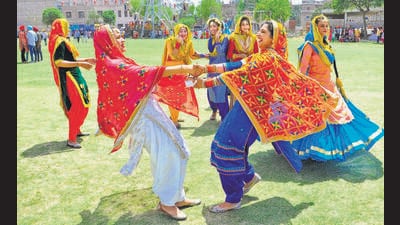
In northern India, particularly in Punjab, people celebrate Baisakhi as a harvest festival. In the south, Kerala celebrates Vishu, where viewing auspicious items (kani) is an important custom. In Assam, people celebrate Bihu, while in West Bengal, Poila Boishakh is celebrated with enthusiasm.
Similarly, people in Manipur, Tripura, Odisha, Bihar, Uttar Pradesh, Himachal Pradesh, Haryana, and Rajasthan celebrate this period as the New Year in various traditional forms. In Haridwar, Uttarakhand, devotees from across the country gather to take a holy dip in the Ganga, marking the sanctity of the occasion.
Telugu-speaking people recently celebrated their New Year as Ugadi, while Marathi and Konkani communities observe their New Year as Gudi Padwa.
We belong to an ancient civilisation, as evidenced by the knowledge of our ancestors. Their understanding of the universe is reflected in these New Year celebrations.
Similarly, the Tamil New Year is a remarkable occasion that celebrates the wisdom of our ancestors. It is a festival that brings together tradition, family, spirituality, and a disciplined way of life. It marks a new beginning, encouraging us to move forward with fresh hope, guided by past experiences.
While we follow the global calendar today, we must also remember our Tamil calendar, which uniquely assigns names not only to days and months but also to years. There are 60 such year-names, and this year, named “parabhava”, is the 40th in the cycle.
The term astronomy originates from Greek, meaning the study of the laws of the stars. In Tamil, it is referred to as “vaaniyal”. Thousands of years ago, Tamil scholars understood that the Earth is spherical and studied the movement of celestial bodies and their influence.
Ancient Tamil literature such as Pathitrupathu describes the nature and movement of the universe. Verses explain how the world is composed of five elements and governed by celestial forces. Other works such as Sirupanarruppadai refer to planetary movements.
Sangam literature contains references to planets and stars. For instance, Saturn is described as dark (Maimmeen) in Purananuru. The tradition of studying celestial influences was associated with scholars known as “Kaniyan”. The poet Kaniyan Poongundranar is believed to have derived his name from this tradition.
Even ancient texts like Tolkappiyam refer to such learned individuals as “Arivar”. Literature such as Akananuru shows that auspicious events like marriages were conducted by choosing proper dates and times. This tradition continues even today in Tamil Nadu. On the first day of Chithirai, panchangam (almanac) is read in temples, and people gather to listen. Panchangam consists of five elements: weekday, lunar day (tithi), karanam, star (nakshatra), and yoga. Based on these, predictions are made about rainfall, agriculture, and other aspects of the year.
Our ancestors used both solar and lunar systems to measure time. While modern science calculates eclipses with advanced instruments, such phenomena were studied and accurately predicted in earlier times. The knowledge passed down by our ancestors is our heritage. We must preserve and pass it on to future generations. Listening to panchangam readings in temples is one way to honour this tradition.
Another aspect of the New Year reflects the respect our people had for nature’s abundance. In homes, auspicious items like fruits and flowers are arranged and viewed first thing in the morning.
Spring is the season when nature renews itself — trees and plants regain their greenery, and flowers and fruits blossom. Tamils, who lived in harmony with nature, began the year by witnessing this abundance through the ritual of kani kanal. Similarly, the traditional dish prepared on this day includes all tastes, including bitter. It teaches us that life encompasses all experiences, both joy and sorrow and that we must accept them with balance.
There is a sense of commonality in these celebrations across the country, as well as in regions around the world where Indian communities have settled. These celebrations remind us of our cultural richness and diversity while highlighting the underlying unity of the nation. They symbolise the hope that we will continue to live together in harmony.
I urge the youth to celebrate the New Year with positivity, faith, and dedication, following the path shown by our ancestors. Let us begin our efforts with determination to contribute to the nation’s progress. Our Bharat has always been one in its civilisational ethos and will continue to remain one.With the blessings of our elders, may the younger generation move forward in the spirit of Ek Bharat and succeed in building a Shreshtha Bharat and a Viksit Bharat by 2047.
CP Radhakrishnan is Vice President of India