The U.K. won’t take part in the planned U.S. blockade of Iran’s ports, Prime Minister Sir Keir Starmer said Monday.
Speaking to BBC News, he said the U.K. was instead focused on getting the Strait of Hormuz — a shipping channel key to global oil and gas supplies — open again to reduce soaring energy prices “as quickly as possible.”
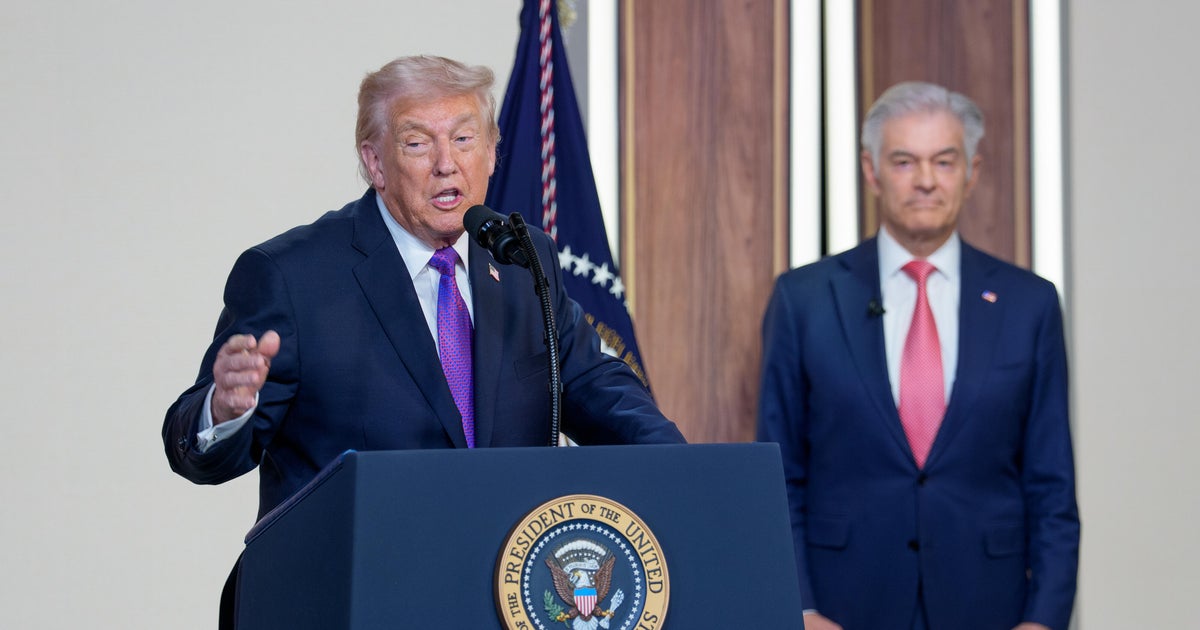
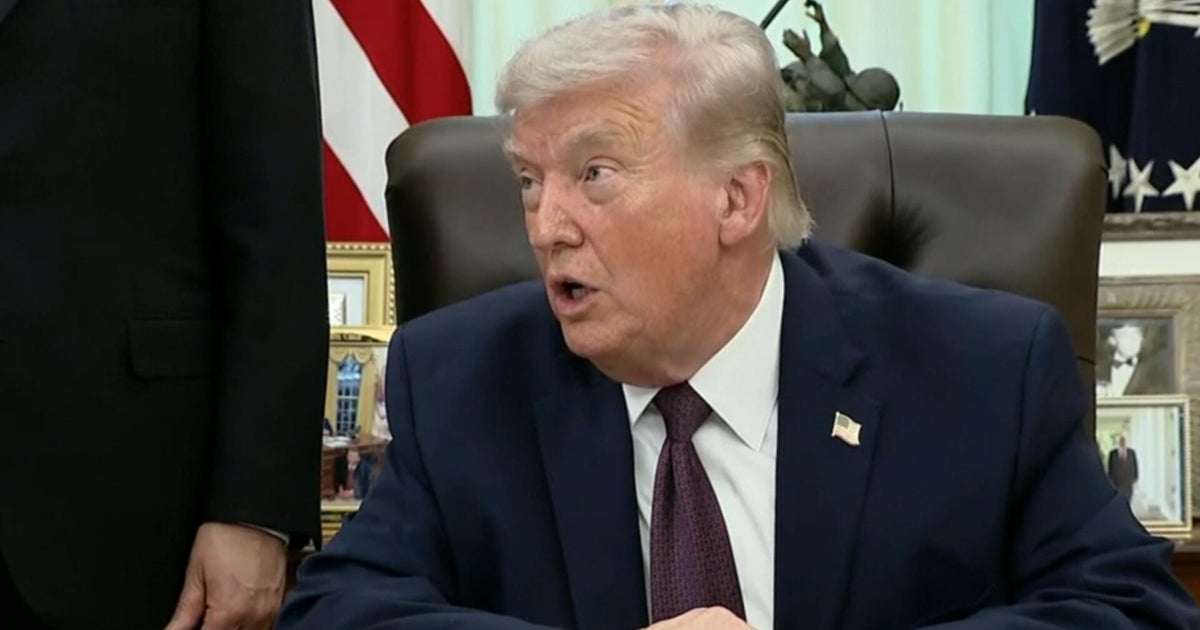
After a marathon weekend of talks between the U.S. and Iran ended without a peace deal, President Trump posted Sunday that the U.S. would begin “BLOCKADING any and all Ships trying to enter, or leave, the Strait of Hormuz.”
The blockade will include all vessels navigating to and from Iranian ports, including those in the Arabian Gulf and Gulf of Oman, according to the U.S. Central Command.
Since the start of the war, Starmer has ruled out direct British military involvement.
Approximately one-fifth of the world’s oil and liquified natural gas passes through the strait, which Iran has largely cut off since US-Israeli strikes began pumeling the country on Feb. 28.
A senior Pakistani government official has confirmed to CBS News that Islamabad has intensified diplomatic efforts to bring Tehran and Washington back to the negotiating table.
Despite the lack of a breakthrough in the historic face-to-face round of talks over the weekend, Pakistani authorities say they remain cautiously optimistic about the prospects for continued engagement between both sides.
Notably, there appears to be an element of rebranding underway, with officials now increasingly referring to the “Islamabad Talks” as the “Islamabad Process,” a shift that suggests an effort to frame the engagement as an ongoing diplomatic track rather than a one-off meeting.
The top-level source also said Monday that Pakistan is in active contact with both Washington and Tehran, urging them to resume dialogue at the earliest opportunity. The primary objective is to reach a workable understanding before the current ceasefire — set to expire around April 22 — ends, in order to prevent a return to all-out-war. Efforts are now underway to facilitate a second round of talks within this narrow window.
According to the source, these diplomatic initiatives are being pursued under the direct instructions of Pakistan Prime Minister Shehbaz Sharif and Army Chief Field Marshal Asim Munir. Both played a key role in bringing the two sides together, were present at varying times throughout the 21-hours of inconclusive talks and have been working intensely to move the process forward.
CBS News has been told Pakistan is now waiting for responses from both the U.S. and Iran.
President Trump posted on Truth Social shortly after midnight EDT Monday: “The United States to Blockade Ships Entering or Exiting Iranian Ports on April 13 at 10:00 A.M. ET. Thank you for your attention to this matter! President DJT.”
Mr. Trump has also said the U.S. will blockade the Strait of Hormuz. Iran has been controlling traffic through the narrow waterway vital for shipping oil, fertilizer and other important goods, with only a fraction of the usual number of ships passing since the war began.
But the U.S. Central Command says the U.S. Navy won’t stop vessels heading through the strait to and from non-Iranian ports.
The U.S. moves would come after marathon talks in Islamabad over the weekend among U.S., Iranian and Pakistani negotiators failed to reach agreement on ending the Mideast war.
Iran’s military says a U.S. naval blockade set to begin Monday would be illegal and amount to piracy, warning that no Gulf ports would be safe if its own are threatened.
“The restrictions imposed by criminal America on maritime navigation and transit in international waters are illegal and constitute an example of piracy,” said a statement issued by the Iranian military’s central command center, Khatam Al-Anbiya, that was read on state television.
“If the security of the Islamic Republic of Iran’s ports in the waters of the Persian Gulf and the Arabian Sea is threatened, no port in the Persian Gulf and the Arabian Sea will be safe,” it added.
President Trump lashed out at Pope Leo XIV in a lengthy social media post Sunday night, calling the pontiff “WEAK on Crime, and terrible for Foreign Policy” adding, “I don’t want a Pope who thinks it’s OK for Iran to have a Nuclear Weapon.”
Leo has been critical of the war in Iran and has previously made statements at odds with other priorities of the Trump administration, such as the ongoing crackdown on illegal immigration.
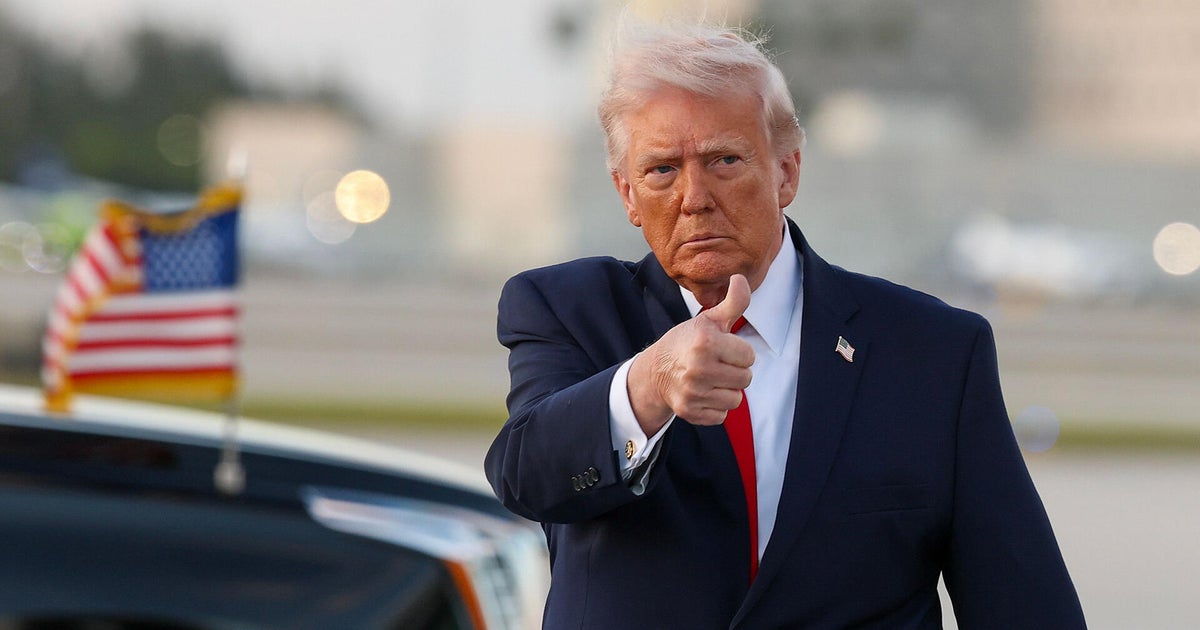
Mr. Trump repeated several of his thoughts on Leo to reporters Sunday night after arriving back in Washington, D.C., saying, “We don’t like a pope who says it’s OK to have a nuclear weapon.”
Leo had called Mr. Trump’s threat to completely destroy Iranian civilization “truly unacceptable,” and encouraged people to “contact the authorities — political leaders, congressmen — to ask them, tell them to work for peace and to reject war, always.”
On Saturday, while he did not mention Mr. Trump by name, Leo said during a prayer vigil for peace at St. Peter’s Basilica, “Enough with the idolatry of self and money! Enough with the display of force! Enough with war! True strength is manifested in serving life.”
Iranian authorities executed at least 1,639 people in 2025, the highest number since 1989, two non-governmental organizations said Monday, warning it risked using capital punishment even more extensively after protests in January and the war against Israel and the U.S.
The number of executions represented an increase of 68 percent from the 975 people Iran put to death in 2024 and included 48 women who were hanged, the Norway-based Iran Human Rights (IHR) and Paris-based Together Against the Death Penalty (ECPM) said in their annual joint report.
If the Islamic Republic “survives the current crisis, there is a serious risk that executions will be used even more extensively as a tool of oppression and repression,” the report said.
IHR — which requires two sources to confirm an execution, the majority of which are not reported in Iranian official media — said the figure represented an “absolute minimum” for the number of hangings in 2025.
The report said the number of executions was by far the highest since IHR began tracking it in 2008 and was the most reported since 1989, in the early years of the Islamic revolution.
The NGOs also warned that “hundreds of detained protesters remain at risk of death sentences and execution” after being charged with capital crimes over January 2026 protests against the authorities — quashed by a crackdown that rights groups say left thousands dead and tens of thousands arrested.
“By creating fear through an average of four to five executions per day in 2025, authorities tried to prevent new protests and prolong their crumbling rule,” said IHR director Mahmood Amiry-Moghaddam.
Hours after President Trump claimed other countries would join the U.S. blockade of the Strait of Hormuz, a senior NATO military official told CBS News, “The U.K. is leading planning efforts of a coalition comprised of more than 40 nations from around the world, many of which are from NATO, to reopen the Strait of Hormuz and protect freedom of navigation.”
The official did not provide specific details on what that might look like, but said, “They are discussing what to do and when to do it, including the pre-positioning of assets now.”
Mr. Trump has been highly critical of NATO throughout the war. He told reporters Sunday night, “I’m very disappointed in NATO, they weren’t there for us. We pay trillions of dollars for NATO, and they weren’t there for us.”
Iranian parliament speaker Mohammad Bagher Qalibaf posted a map of gas stations near the White House, saying, “Enjoy the current pump figures.”
“With the so-called ‘blockade’, Soon you’ll be nostalgic for $4–$5 gas,” Qalibaf said on X.
As the situation in the Strait of Hormuz sends global energy costs skyrocketing, AAA reports the price of a gallon of regular has increased 40% since the day before the war with Iran began.
When asked in an interview with Fox News on Sunday if the price of oil and gas will be lower before the midterm elections in November, President Trump said: “It could be, or the same, or maybe a little bit higher, but it should be around the same.”
Vice President JD Vance landed back in Washington Sunday afternoon after a 56-hour Pakistan journey for high-level talks with Iran in Islamabad. No deal was reached during the talks.
He made phone calls from Air Force Two on his trip back from Pakistan, including to Israel’s ambassador to the U.S., according to a U.S. government official.
The U.S. and Iran did not reach agreements on several of America’s red lines to end the war during the first round of negotiations, according to a U.S. official.
The official said Iranian delegates could not agree on Iran ending uranium enrichment, dismantling major nuclear enrichment facilities, allowing the retrieval of its highly enriched uranium, accepting a framework for broader peace, security and deescalation that includes regional allies, ending funding for Hamas, Hezbollah, and the Houthis, and fully opening the Strait of Hormuz without charging passage tolls.