In what was considered to be ‘s most consequential election this year, Hungarians on Sunday cast their votes, marking a record turnout in an election that is likely to unseat populist Prime Minister Viktor Orbán, a close ally of US President .
According to an AP report, Sunday’s election marks a crucial moment for Orbán, the European Union’s longest-serving leader and one of its prominent antagonists. He has undergone a striking political evolution, from a liberal, anti-Soviet firebrand in his early career to the Russia-friendly nationalist now admired by the global far right.
Hungary voted on Sunday
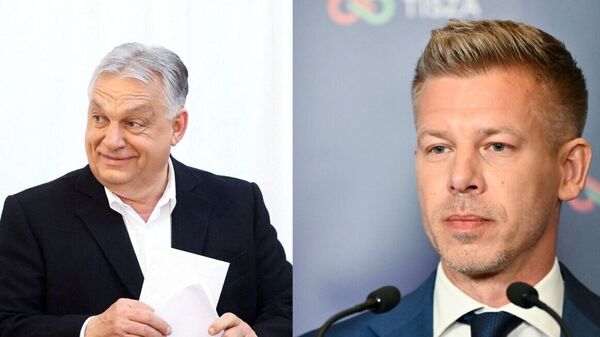
Polling opened at 6 a.m. and closed at 7 p.m., with initial results expected Sunday night. Orbán and his top challenger, Péter Magyar, arrived at separate polling stations in Budapest at nearly the same time to cast their votes.
Speaking to reporters outside, Orbán, 62, said the campaign had been “a great national moment on our side” and thanked activists and supporters for their work. “I’m here to win,” he said.
According to the National Election Office, at 6:30 p.m., the turnout was recorded at 77 percent, signaling a record number in any election in Hungary’s post-Communist history. With two hours remaining before polls closed, 140,000 more voters had cast ballots than in the entire 2022 election.
Hungary’s election a choice between East or West: Péter Magyar
After casting his vote, Orbán’s competitor Magyar told reporters that the election was “a choice between East or West, propaganda or honest public discourse, corruption or clean public life.” He added, “I urge all Hungarian citizens to exercise their right to vote.”
Orbán has consistently hindered efforts to support Ukraine in its war against Russia’s full-scale invasion, which was launched in February 2022. At the same time, he has cultivated close ties with Russian President Vladimir Putin and refused to end Hungary’s reliance on Moscow’s fossil fuel imports.
According to the report, it was recently revealed that a top member of Orbán’s government frequently shared the contents of the European Union’s discussions with Moscow, a move that raised serious allegations that Budapest was acting on behalf of within the bloc.
The election drew close attention from Europe and beyond, underscoring the outsized role Orbán plays in far-right populist politics worldwide.
Hungary’s strained ties with the European Union
During his 16-year tenure as Hungary’s prime minister, Orbán has been responsible for launching harsh crackdowns on minority rights and media freedoms, weakening many of Hungary’s institutions, and facing allegations of channeling large sums of money to a circle of allied business elites, claims he has denied.
He is also responsible for straining the EU’s ties with Hungary. Despite Hungary being one of the smaller countries in the bloc, with a population of 9.5 million, Orbán has repeatedly used his veto to block decisions that require unanimity.
Most recently, he blocked a 90-billion euro ($104 billion) European Union loan to Ukraine, prompting his partners to accuse him of hijacking the critical aid.
Yet, after winning four consecutive elections with a two-thirds majority for his party in Parliament, signs have emerged that Orbán’s absolute control over Hungary’s politics may be reaching its end.
(With agency inputs)
- The election demonstrates the growing discontent among Hungarians towards Orbán’s governance and policies.
- Record voter turnout indicates a significant shift in political engagement and public interest in the electoral process.
- Orbán’s long-standing ties with Russia and his blocking of EU aid to Ukraine highlight tensions within European politics.