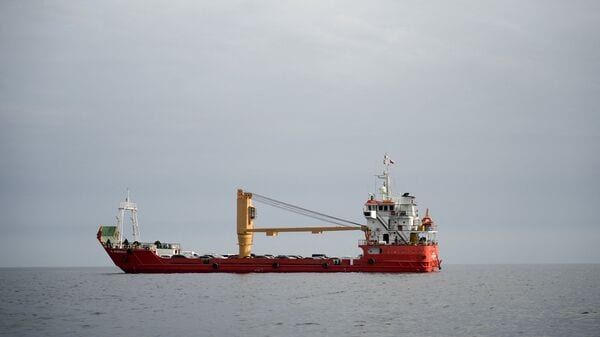
To counter escalating dangers within the Strait of Hormuz, the United States has stationed two sophisticated warships in the area. Units managed by US Central Command (CENTCOM) are currently mobilizing for potential mine-clearing missions in this critical maritime corridor.
How will US warships locate mines in Strait of Hormuz?
The US Navy’s guided-missile destroyers, the USS Frank E Peterson and USS Michael Murphy, have initiated maneuvers along this vital energy transit route. Their objective involves locating and neutralizing naval mines allegedly deployed by These underwater explosives pose a lethal threat to commercial shipping, particularly massive oil tankers.
“The two ships transited the Strait of Hormuz and operated in the Arabian Gulf as part of a broader mission to ensure the strait is fully clear of sea mines previously laid by Iran’s Islamic Revolutionary Guards Corps (IRGC),” said US military command.
To minimize human risk, the Navy avoids sending manned vessels into suspected minefields. Instead, they deploy autonomous robotic drones known as unmanned underwater vehicles (UUVs), including the Mk 18 and Mod 2 Kingfish. These torpedo-like machines navigate independently, utilizing advanced sonar technology to scan the ocean floor for concealed ordnance.
Supplementing these efforts, the US has dispatched MH-60S helicopters to monitor the waters from the air. These aircraft utilize the Airborne Laser Mine Detection System (ALMDS), a specialized laser array designed to rapidly identify mines drifting on the surface or submerged just beneath it.
Beyond supporting mine-clearance, both destroyers offer robust defense. Outfitted with the Aegis Combat System and high-tech interceptor missiles, they are prepared to track and destroy incoming aerial or surface attacks, including those launched by the IRGC.
When a mine is successfully identified by drone or helicopter, it is neutralized via the Airborne Mine Neutralization System (AMNS). This remote-controlled process deploys a small robotic charge that swims to the target and detonates, destroying the mine safely.
“Today, we began the process of establishing a new passage and we will share this safe pathway with the maritime industry soon to encourage the free flow of commerce,” said US Admiral Brad Cooper.
Currently, approximately 800 vessels remain trapped in the vicinity due to the intensifying friction between the United States, Israel, and Iran.
Tensions spiked after Iran effectively obstructed the Strait of Hormuz, a passage responsible for nearly 20 percent of global oil and gas trade. This strategic blockade has triggered a surge in energy costs, driving global oil prices past the $100 per barrel mark.