US-Iran war and ceasefire talks: US Vice President JD Vance left from Islamabad on Sunday, after he said that a peace deal could not be achieved after 21 hours of the most significant direct negotiations between the United States and Iran in over a decade, saying Tehran had refused to make a long-term commitment to abandon its nuclear weapons ambitions.
Vance: “This Is Bad News for Iran Much More Than for the US”
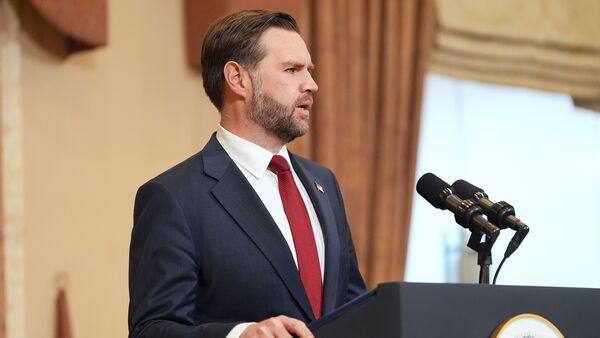
Standing at a podium flanked by American flags, with special envoy at his side, Vance did not soften the outcome. “This is bad news for Iran much more than this is bad news for the US,” he told reporters in the Pakistani capital. “We have made very clear what our red lines are…and they have chosen not to accept our terms.”
The US vice president said the two delegations had held “substantive discussions” across multiple rounds and formats but could not close the distance on the central question of Iran’s nuclear ambitions.
JD Vance framed Washington DC’s demands, saying : “The simple fact is that we need to see an affirmative commitment that they will not seek a nuclear weapon and they will not seek the tools that would enable them to quickly achieve a nuclear weapon. That is the core goal of the president of the United States. And that’s what we’ve tried to achieve through these negotiations.”
The Nuclear Impasse at the Heart of US-Iran Deadlock
The United States and Israel struck sensitive Iranian nuclear sites both during the war launched on 28 February and in strikes conducted the previous year. Vance acknowledged that much of Iran’s enrichment infrastructure had already been dismantled by force, but argued that physical destruction alone was insufficient without a political commitment to match.
“Their nuclear programme, such as it is, the enrichment facilities that they had before, have been destroyed,” he said. “But the simple question is: do we see a fundamental commitment of will for the Iranians not to develop a nuclear weapon, not just now, not just two years from now, but for the long term? We haven’t seen that yet. We hope that we will.”
Washington DC’s 15-point proposal includes restricting Iran’s nuclear programme and reopening the Strait of Hormuz, demands Iran’s delegation has characterised as excessive. Tehran’s own 10-point counter-proposal called for a guaranteed end to the war, Iranian control over the strait, and a halt to Israeli strikes on Hezbollah in Lebanon.
A “Final and Best Offer” Left on the Table
Vance did not slam the door entirely. Departing had left behind a document it considered its clearest and most complete position. “We leave here with a very simple proposal, a method of understanding that is our final and best offer. We’ll see if the Iranians accept it,” he said.
He also insisted the US negotiating posture had been reasonable throughout. “We were quite flexible and accommodating and negotiated in good faith,” he said, while conceding that significant progress had not materialised.
Throughout the 21-hour session, Vance said he was in constant communication with Washington. “I spoke with Trump a half dozen times, a dozen times, over the past 21 hours,” he said, adding that he had also been in contact with Secretary of State Marco Rubio, Treasury Secretary Scott Bessent, Defence Secretary Pete Hegseth, and CENTCOM commander Admiral Brad Cooper.
Ceasefire Hangs in the Balance as War Enters Its Seventh Week
The breakdown in Islamabad puts the fragile two-week ceasefire, announced just days ago, in serious jeopardy. Trump had said he would suspend attacks against Iran for two weeks pending negotiations. Vance’s remarks offered no clarity on what happens when that window expires, or whether the ceasefire will hold in the interim.
The war, now in its seventh week, has killed at least 3,000 people in Iran, more than 2,000 in Lebanon, 23 in Israel, and over a dozen in Gulf Arab states, leaving lasting infrastructure damage across half a dozen countries in the region.
Two Pakistani officials told the Associated Press that discussions between the heads of delegations would resume after a break, and that some technical personnel from both teams remained in session, though both spoke on condition of anonymity as they were not authorised to brief the press.
Iran’s Foreign Minister Abbas Araghchi, who was part of Tehran’s delegation in Pakistan, had entered negotiations with stated “deep distrust” following strikes on Iran during previous talks, and made clear that his country was prepared to retaliate if attacked again.
The Strait of Hormuz: Still Blocked, Still Contested
Iran’s continued grip on the , through which roughly a fifth of the world’s traded oil once passed daily, remains its most potent strategic lever. Since the ceasefire, only twelve ships have been recorded transiting the waterway, compared with more than a hundred a day before the war. The closure has sent energy prices soaring and effectively severed the Persian Gulf’s oil and gas exports from the global economy.
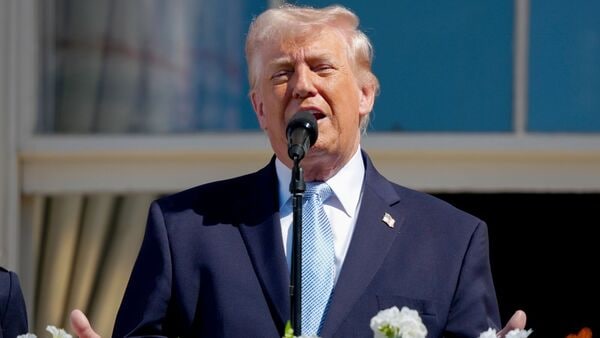
President Donald rump said on Saturday that the US had begun operations to clear the strait. “Today, we began the process of establishing a new passage and we will share this safe pathway with the maritime industry soon,” Admiral Brad Cooper of US Central Command said. Additional forces, including underwater drones, are expected to join the effort in the coming days. Iran’s state media, however, denied that any joint military command had authorised such a transit.
Trump told journalists during the night, “We’re sweeping the strait. Whether we make a deal or not makes no difference to me.”
Iran’s Red Lines and the Wider Regional Stakes
Iran’s delegation arrived in Islamabad with preconditions of its own. Tehran’s 10-point proposal demanded compensation for damage caused by US-Israeli strikes, the release of Iran’s frozen assets, and an end to Israeli strikes on Hezbollah in Lebanon, whose health ministry reported the death toll there has surpassed 2,000. Iran’s state-run news agency said the three-party talks only began after certain Iranian preconditions, including a reduction in Israeli strikes on southern Lebanon, were met.
The stakes drew observers from across the region. Officials from China, Egypt, Saudi Arabia and Qatar were reported to be in Islamabad to indirectly facilitate talks, though all spoke on condition of anonymity, according to several media reports.
What Comes Next: Israel, Lebanon, and a Ticking Clock
Israel pressed ahead with strikes in Lebanon even as the Islamabad talks were under way, maintaining that no ceasefire exists on that front. Iran and Pakistan have disputed that position.
Negotiations between Israel and Lebanon are expected to begin on Tuesday in Washington DC, though Lebanese Prime Minister Nawaf Salam postponed a planned trip to Washington citing domestic circumstances.
The first round of talks is expected at the ambassadorial level.