Have negotiations between Iran and the United States actually concluded- or are they still ongoing behind closed doors? Confusion deepened on Sunday after sharply contrasting accounts from Tehran and Washington DC over the status of high-stakes ceasefire talks held in Pakistan.
Iran and the United States ended their first direct talks in over a decade in Islamabad on Saturday without a breakthrough, with contradictory statements from both sides deepening uncertainty over whether negotiations had even concluded
Contradictory claims from Tehran and Washington DC
Iran’s government signalled that talks had reached a pause point after an intense negotiating session.
“Iran-US talks mediated by Pakistan concluded after 14 hours. Technical teams from both sides are now exchanging expert texts. Negotiations will continue despite some remaining differences,” the government said in a post on X, without specifying when discussions would resume.
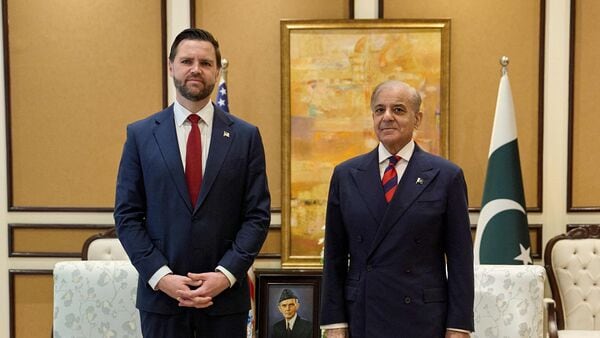
Yet, almost simultaneously, accounts attributed to the office of US Vice President JD Vance suggested negotiations had not wrapped up at all.
A pool report cited by multiple outlets indicated that talks had pushed past the 15-hour mark, with discussions continuing into the early hours.
“Fifteen hours and counting,” an American official was quoted as saying, underscoring the protracted and unresolved nature of the engagement.
First direct talks in a decade carry high stakes
The Islamabad dialogue marks a rare diplomatic opening between Iran and the US – their first direct talks in more than ten years, and the most senior-level contact since the 1979 Islamic Revolution.
The outcome carries global implications. At stake is not only the durability of the current ceasefire but also the reopening of the Strait of Hormuz — a maritime chokepoint through which roughly 20% of the world’s energy supplies pass.
Iran has blocked the Strait of Hormuz since the outbreak of hostilities, sending oil prices sharply higher and exacerbating a conflict that has already claimed thousands of lives.
Stalemate over Hormuz and nuclear demands
Despite extended negotiations, significant differences appear to persist.
According to reporting cited from the Financial Times, talks have reached a stalemate centred on control over the Strait of Hormuz. Iranian sources suggest that US demands have complicated efforts to establish a common negotiating framework.
A security source indicated that the status of the strait would remain unchanged until both sides agree on a shared basis for further talks, blaming “excessive demands” from Washington DC.
Those demands, as outlined by pro-government commentator Ali Gholhaki, include sweeping concessions:
“the US is demanding the exit of 400 kg of uranium from Iran — ‘the same stockpile it failed to seize in a previous military operation’ — along with 0% enrichment and full management of the Strait of Hormuz.”
He added: “A test today on the strait met a firm Iranian rejection. No US commitments on Lebanon, indicating Washington did not come for genuine negotiations,” in a post on X.
Next round expected as “serious disagreements” persist
Iranian state media reported that an initial round of talks concluded on Saturday, with another round likely to follow within hours. A trilateral format — involving Pakistan as mediator – has seen both sides exchange draft proposals through technical teams.
However, progress remains uncertain. Iran’s Tasnim news agency, affiliated with the Islamic Revolutionary Guard Corps, reported that some “serious disagreements” continue to divide the delegations.
At Pakistan’s suggestion, both sides have agreed in principle to continue discussions, though no formal timeline has been confirmed.
Strait of Hormuz remains the central flashpoint
For now, the status of the Strait of Hormuz remains unchanged — a critical pressure point in negotiations with global ramifications.
Until a “common framework” is agreed, Iranian officials suggest the blockade will remain in place, prolonging uncertainty in energy markets and raising the stakes of an already fragile diplomatic process.