“Ninety percent of all millionaires become so through owning real estate.”
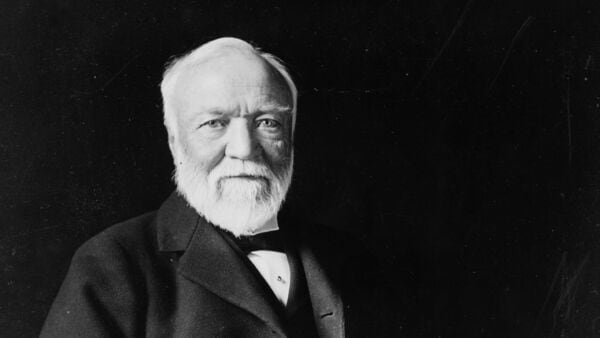
The above words – extremely popular in the modern real estate scenario – and widely attributed to American steel magnate Andrew Carnegie, emphasises the importance of ownership.
What the quote means?
Taken at face value, the quote is not really about property hype. It is about ownership.
Through his words – Carnegie points out that wealth is often built through assets that compound, produce income, and can be financed over time, rather than through wages alone. Real estate fits that logic because it can combine leverage, rental cash flow, long holding periods, and the possibility of rising land value.
Carnegie’s quote also has a notion of discipline embedded in it.
Real estate is often romanticised, but durable wealth through property is usually built through patience, selection, financing, upkeep, and timing.
Why this quote resonates?
Carnegie – who led the expansion of the American steel industry in the late 19th century – remains relevant even today. His words still resonate because real estate continues to be a core pillar of wealth, even in a world dominated by financial markets and technology stocks.
The takeaway from his advice is not simply to buy any property, but to build wealth through assets you understand, can manage well, and are able to hold onto long enough for compounding to work in your favour.
The lesson also fits Carnegie’s wider business life, which was marked by concentration, control, and long-range thinking rather than quick wins.
Carnegie himself became rich mainly through industrial ownership and vertical integration in steel, which makes the deeper lesson broader than property alone: large fortunes usually come from owning productive assets.
More about Andrew Carnegie
Andrew Carnegie was born in Dunfermline, Scotland, in 1835 and immigrated to the United States with his family in 1848 after economic hardship hit the weaving trade.
He began work at age 12, rose through telegraph and railroad jobs, made early investments in railroads, oil, and iron, and then built Carnegie Steel into one of the dominant industrial companies of the late 19th century. After selling Carnegie Steel to J.P. Morgan in 1901, he turned decisively toward philanthropy and argued that great fortunes should be used for ‘the improvement of mankind’.
(Disclaimer: The first draft of this story was generated by AI)