Pakistan is gearing up for the peace talks between Iran and the US to finally end the war that began on February 28, and which is currently in a two-week ceasefire phase announced on Tuesday.
Pakistan’s foreign minister, Isaq Dar, on Friday announced visa-on-arrival for all delegates, including journalists from all participating nations.
“Pakistan welcomes all delegates, including journalists from participating nations, travelling in relation to the Islamabad Talks 2026. To this end, all airlines are requested to permit boarding to all such individuals without a visa. Immigration authorities in Pakistan will issue them visa on arrival,” Dar wrote on social media platform X.
The Shebaz Sharif government, which has been mediating between Iran and the US for a while, has kept its cards close to its chest, without confirming the venue. The timing of the talks has also not yet been confirmed.
Sharif had said the talks would take place on Friday, while the White House said the first round would begin on Saturday.
Islamabad on lockdown
The Serena Hotel, located next to the Pakistan foreign ministry in Islamabad’s high-security Red Zone, asked its guests to clear out on Wednesday, and that same day, authorities in the capital announced a two-day public holiday on Thursday and Friday.
The talks themselves are expected to be indirect: the two delegations sitting in separate rooms with Pakistani officials shuttling proposals between them, mirroring the format used in earlier Oman-mediated rounds.
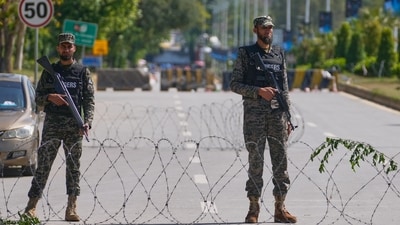
As far as the security situation is concerned, the streets of Islamabad are flooded with armed security personnel in military fatigues, traffic diversions and police checkpoints. The capital, already a quiet city, was even quieter on Friday.
Interior minister Mohsin Naqvi, in a meeting, reviewed the security arrangements in place for the foreign dignitaries, the ministry said in a post on X.
“Hosting the US-Iran talks is an honour for Pakistan,” the minister was quoted as saying. He directed the relevant authorities to take “all possible measures to extend hospitality” and ensure the safety of the arriving delegations.
“A control room has been established with the interior ministry,” Naqvi said.
Islamabad’s Red Zone is being kept completely sealed, allowing entry only to relevant individuals.
Who are the negotiators?
US Vice President JD Vance will lead the American team, joined by special envoy Steve Witkoff and President Donald Trump’s son-in-law Jared Kushner.
It marks the most senior US engagement with Iran since Secretary of State John Kerry negotiated the 2015 nuclear deal. Witkoff held multiple rounds of Oman-mediated talks with Iranian foreign minister Abbas Araghchi before the war cut the process short.
Iran’s parliament speaker, Mohammad Bagher Ghalibaf, and Araghchi are expected to lead the Iranian delegation.
Ghalibaf is a former IRGC commander, and it remains unclear whether any active IRGC representative will attend.
Washington’s reported 15-point proposal centres on Iran’s enriched uranium, ballistic missiles, sanctions relief and the reopening of the Strait of Hormuz. Tehran has countered with a 10-point plan demanding control over the strait, a toll for vessels crossing the strait, an end to all regional military operations and the lifting of all sanctions.
Lebanon is also a major sticking point. Israel continued its strikes in the country targeting Hezbollah — after the ceasefire came into force — with Israeli Prime Minister Benjamin Netanyahu rejecting Prime Minister Shehbaz Sharif’s assertion that the truce included Lebanon.
JD Vance appeared to adopt a softer tone, saying there may have been a “legitimate misunderstanding” on Iran’s part about Lebanon’s inclusion.
Iran’s President Masoud Pezeshkian warned on X that Israel’s strikes on Lebanon rendered the negotiations “meaningless”.
“Our hands remain on the trigger. Iran will never forsake its Lebanese brothers and sisters,” he said.