The stage may be set for talks between the United States and Iran in Islamabad on Friday, but a cloud of uncertainty continues to hang over them. A key issue ahead of the talks and since the ceasefire was agreed upon remains Lebanon’s inclusion in the truce.
As Beirut witnesses one of its worst attacks from Israel in over 40 years, the Arab country has its eye set on the talks as it seeks help against the ongoing Israeli strikes.
Confusion has erupted over Lebanon’s inclusion in theWhile Pakistan’s first statement on the ceasefire calls for a halt in all hostilities, including Lebanon, both the US and Israel have denied this.
Meanwhile, Iran has threatened to derail the ceasefire and block the Strait of Hormuz if the attacks against Lebanon continue.
Israeli Prime Ministerhas reiterated Tel Aviv’s stance, which is that it will work towards disarming and dismantling Hezbollah, which is an Iranian-backed militant group.
As the world watches closely, here’s what we know ahead of the highly anticipated talks in Pakistan:
US-Iran talks set for Friday
Delegations from the United States and Iran will meet in the Pakistani capital of Islamabad on Friday, April 10.
In the run-up to the talks, Pakistani authorities have declared April 9 and 10 as public holidays in Islamabad as a security measure. Only hospitals, police and other essential utilities will be allowed to operate.
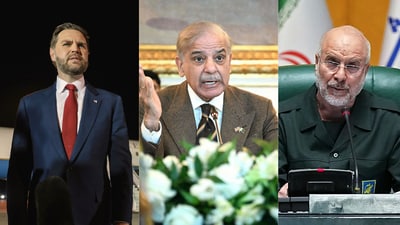
From the US, the white House has stated that the American delegation will be led by Vice President. Vance will be joined by special envoy Steve Witkoff and Trump’s son-in-law and senior advisor Jared Kushner.
The delegation from Iran is expected to be led by parliament speaker Mohammed Bagher Ghalibaf. It remains unclear whether representatives from the Islamic Revolutionary Guard Corps and the foreign minister, Abbas Araghchi, will be part of the delegation.
Pakistani Prime Minister and Deputy PM and Foreign Minister Ishaq Dar are expected to host the talks over the weekend. The involvement of Field Marshal Asim Munir remains unclear, even though it has been speculated that Munir was involved in the negotiations leading up to the ceasefire announcement.
The question of Lebanon
As Israel continues to pound , Lebanese Prime Minister Nawaf Salam called on Sharif to confirm its inclusion in the Iran war ceasefire.
In a statement, the PM’s office called on Pakistan to “confirm that the ceasefire includes Lebanon to prevent a recurrence of the Israeli attacks witnessed yesterday”.
Pakistan’s Sharif has also confirmed the call from Salam, stating that Islamabad strongly condemned the truce violations carried out in Beirut.
Over 1,500 people in Lebanon, including 130 children, have been killed since Israeli strikes and ground operations started on March 2.
As per the Lebanese health ministry, a total of 1,530 people have been killed, which includes 102 women, 130 children, and 57 health workers. Furthermore, around 4,812 people have been wounded due to the strikes and bombardment.
Israel’s ‘mistrust’ for Pakistan
Despite Pakistan claiming that Lebanon was part of the negotiations (and Sharif’s statement on X, which includes Beirut), Israel continues to state otherwise.
Ahead of the talks, Israel’s ambassador to India stated that Tel Aviv does not trust Pakistan as a mediator and will rely on its American counterparts to convey the Israeli message.
“One wouldn’t trust Pakistan. They have been behaving very problematically when it comes to sponsoring terrorism, and they do not recognise our state,” said Israeli envoy Reuven Azar.
“The Americans have decided to get their assistance, and that is their choice. We trust our American friends to do whatever is needed and to deal with the challenges we have in front of us,” said Azar.
The Israeli envoy to New Delhi also recalled the US-led ceasefire negotiations in the Gaza Strip, stating that during this time, Washington consulted “problematic countries” such as Turkey and Qatar.
“They took facilitation and support from problematic countries such as Turkey and Qatar, which support the Muslim Brotherhood and terrorist organisations in the region,” he said.
“We hope at the end of the day that we achieve the results, and we are going to make sure together with our American friends that these threats are neutralised,” the envoy told PTI.
A fragile truce
The US and Iran agreed to a two-week ceasefire on Wednesday. Moments after this truce was announced, it was declared that the Strait of Hormuz would be reopened.
However, Israel stepped in and stated that it will not cease its attacks on Lebanon as it was not part of the two-week truce agreement.
Following the intense attacks on Lebanon, Iran once again closed the Strait of Hormuz and stopped the passage of all ships and vessels in the key strait.
Iran and the IRGC condemned the strikes and warned of a resumption of attacks if Israel did not stop attacking Beirut.
Iranian deputy foreign minister further stated that Tehran was ready to resume attacks on Wednesday night due to the fresh bombardment in Lebanon, but decided against it after Pakistani intervention.
It is also to be noted that Israeli attacks on Lebanon were not the only truce violations. Iran reported that it was struck on the Sirri and Lavan islands, where key oil refineries were targeted. Furthermore, Kuwait, UAE, Saudi Arabia and Qatar reported attacks moments after the truce was announced.