It is not often that middle-school civics sparks judicial controversy. The recent banning of a civics textbook by the Supreme Court, however, has snowballed from a school lesson into a question of judicial authority and institutional temperament.
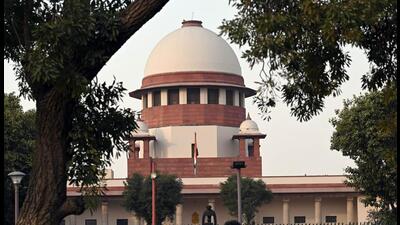
The facts are, by now, well known. The Supreme Court took suo motu cognisance of a chapter in a class VIII NCERT textbook titled “The Role of the Judiciary in Our Society”. The chapter presents the judiciary as a pillar of democracy, situates it constitutionally and outlines its role as protector of citizens’ rights. At the same time, it acknowledges widely recognised challenges — pendency of cases, shortage of judges, and possibility of corruption within the system. It is this reference to institutional challenges that drew the Supreme Court’s ire.
Still, the episode would likely have passed as a minor skirmish had the Court’s response been proportionate. To the extent the chapter is criticised for bias, omission or substantiation, a reasoned critique and a directive for revision would have been sufficient. Instead, the Supreme Court responded with unprecedented force. Its remarks invoked malicious intent, spoke of the judiciary “bleeding,” and warned that “heads must roll”. It demanded the names of authors, initiated contempt proceedings, and went so far as to direct that three academics be blacklisted from publicly funded curriculum work. A blanket ban was imposed on the textbook, and immediate seizure of all existing copies was ordered. NCERT’s apology, too, was not accepted. It was an unusually muscular response to a schoolbook.
The existence of a statutory provision that permits such an exercise of power is contestable. But equally urgent is the question of what such action communicates. When courts display disproportionate fury, it creates immediate ripple effects. Even when unintended, they mirror the very executive overreach that they are meant to check. Academics, universities and citizens self-censor out of fear. Disagreement and dissent are stifled. In one instance, a law student who wrote a blog post critiquing the judiciary was asked by his university to delete it. That he did not oblige was the young man’s exercise of his democratic right — and to his credit. The fact that such a request was made at all reveals the climate such interventions create.
Ironically, a careful reading of the chapter does reveal one genuinely objectionable element. But it lies elsewhere. It is in the odd and unnecessary inclusion of Hindu mythological references used to illustrate constitutional ideas.
In a plural, secular republic, weaving religious narratives into State-sanctioned education corrodes the very wall that the Constitution erects between faith and State. If anything, this is what clashes with constitutional values. Yet, curiously, this breach has barely raised an eyebrow.
There are other aspects too — gratuitous emphasis on some former judges over others, for instance, skews what ought to be an even-handed introduction to constitutional function. The side-trip into a judgment on Sanskrit education is as puzzling as is the elevation of environmental law over core foundational doctrines. These are all editorial misfires that demand serious revision.
But critique of the chapter need not come at the expense of the court’s dignity, the NCERT, or the fundamental rights of its authors. Judicial authority, painstakingly built over decades of principled restraint and legal rigour, is earned not by the weight of its hand, but by the steadiness of its balance. Its exercise must be measured and aimed at correction, not intimidation.
For if even the highest court speaks the language of intimidation, as the State often does, to whom, then, shall the citizen turn? The law may be written in ink, but its weight is written in trust.
As the court now examines affidavits filed by the blacklisted academics in which they state that the chapter employed standard critical pedagogy, was a collective work with no single author, and subjected to rigorous review before finalisation, it must proceed in a way that preserves both, justice and public trust.
The chapter’s flaws too, must be examined in their entirety.
Whether the Court can act in this way is a question for constitutional lawyers. Whether it should, is a question for everyone else.
Insiyah Vahanvaty is a socio-political commentator and author of ‘The Fearless Judge’. Ashish Bharadwaj is ex-dean at BITS Pilani and Jindal Global University. The views expressed are personal