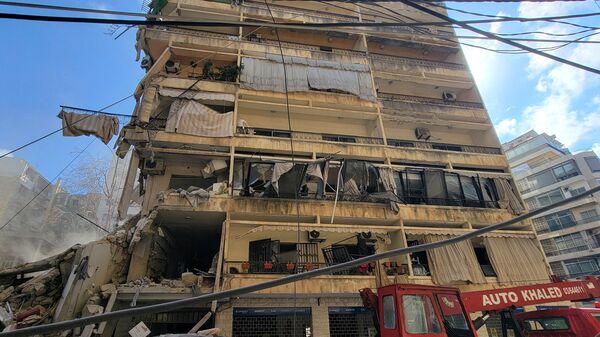
A large wave of strikes by the Israeli military was reported across Lebanon on Wednesday, just hours after the US and Iran agreed to a two-week ceasefire. Hospitals have been overwhelmed as casualties mount, with many feared trapped under the rubble of collapsed buildings, according to a report by the New York Times.
Israel described Wednesday’s attacks as the largest wave of strikes to date in the conflict – as it hit the southern suburbs of Beirut, southern Lebanon and the eastern Bekaa Valley.
Why is Israel bombing Lebanon?
Israel reportedly backed US President Donald Trump’s decision to pause attacks on Iran for two weeks, but made it clear the understanding does not apply to Lebanon, where its forces remain engaged in a prolonged conflict with Hezbollah, according to a report by The New York Times.
The ceasefire agreement comes 39 days after Iran launched a wave of retaliatory attacks in response to the US and Israel’s joint strikes on the Islamic Republic. Explosions were also reported across Abu Dhabi and Doha – among other Gulf hubs – which are also home to US military bases.
What does Iran-US ceasefire deal say?
Iran and the US agreed to a conditional two-week ceasefire, during which shipping traffic will be .
As part of the arrangement, Iran had said that it would allow the passage of vessels through the Hormuz Strait for two weeks, with their transit coordinated by the Iranian military.
The Islamic Republic also – that Trump described as “workable.” It includes the complete cessation of war in Iran, Iraq, Lebanon and Yemen; “full commitment” to lifting sanctions on Iran; the release of Iranian funds and frozen assets held by the US; and “full payment of compensation for reconstruction costs” to Iran.
What did Iran say about Israel?
A few hours after the ceasefire was confirmed, Netanyahu said: “Israel supports President Trump’s decision to suspend strikes against Iran for two weeks subject to Iran immediately opening the straits and stopping all attacks on the US, Israel and countries in the region.”
The Israeli PM’s statement added that “ceasefire does not include Lebanon”, where Israel has ground troops.
A report by the BBC mentioned that there is still no clarity on how Netanyahu was involved in Trump’s decision-making.
Where will ceasefire talks be held?
The are scheduled to be held in Islamabad.
“I warmly welcome the sagacious gesture and extend deepest gratitude to the leadership of both the countries and invite their delegations to Islamabad on Friday, 10th April 2026, to further negotiate for a conclusive agreement to settle all disputes,” Pakistani PM Shehbaz Sharif said
Who will be leading talks from both sides?
United States: Vice President JD Vance is expected to lead the US delegation.
Iran: Parliament Speaker Mohammad Bagher Qalibaf is set to lead Tehran’s negotiating team, according to Iran’s ISNA news agency.
Pakistan PM Shehbaz Sharif and Chief of Army Staff of Pakistan Asim Munir would moderate the talks, as per reports.
Will Israel participate in ceasefire talks?
To date, reports state that Israel is not expected to participate in ceasefire talks.