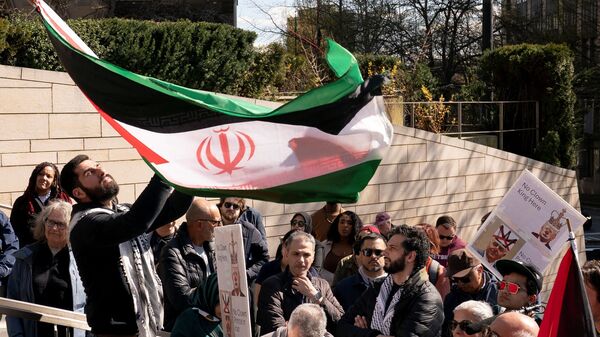
After 39 days of intense fighting, the US, Israel, and Iran have agreed to suspend the hostilities, at least temporarily, as the three countries agreed on a 15-day ceasefire. US President Donald Trump, who hours before the deal was reached, was threatening that a “whole civilization will die tonight,” was quick to claim a “total and complete victory” for the US.
Who is the winner?
US claims victory
“Total and complete victory. 100 percent. No question about it,” Trump told AFP shortly after the announcement of the truce. This is despite the fact that the US has not fully achieved any of the declared goals of , including the destruction of Iran’s nuclear program and military infrastructure, regime change, and annihilation of Iran’s proxy networks. The only tangible ‘victory’ for the US in the ceasefire deal is Iran agreeing to reopen the , which, ironically, was not closed before the start of the war on February 28.
Historic victory says Iran
Iran, too, has claimed victory after the ceasefire deal was reached on the 11th hour on Tuesday. According to Iran, it has achieved a “historic and crushing defeat” of the United States as Washington has been forced to accept a .
Who is the winner?
While there are no clear winners or losers in this conflict, many observers have handed at least a symbolic victory to Iran, just for not losing the war against its much stronger opponents, the US and Israel.
What happened in 2006?
2006 Israel-Hezbollah war
Incidentally, the Iranian victory is reminiscent of the outcome of the 2006 Israel- war, in which the Tehran-backed Lebanese militia was widely perceived as the ‘winner’ because it was not defeated by Israel after the 34-day-long conflict, despite suffering significant casualties.
The ‘victory’ catapulted Hezbollah as the premier resistance force against Israel in the region, a title it continued to hold for nearly two decades. Hezbollah went on to become the world’s most heavily armed and powerful non-state actor, until another round of conflict with Israel in the wake of the October 7, 2023, Hamas terror attack.
Now Iran also has a similar victory in the current conflict against the US and Israel.
Iran’s 10-point proposal
US agrees to Iran’s 10-point proposal
According to Iran, the future negotiations will be based on its 10-point agenda.
* No new aggression against Iran
* Continued Iranian control over the Strait of Hormuz
* Acceptance of enrichment
* Removal of all primary sanctions
* Removal of all secondary sanctions
* Termination of all UN Security Council resolutions
* Termination of all Board of Governors resolutions
* Payment of compensation to Iran
* Withdrawal of US combat forces from the region
* Cessation of war on all fronts, including against the heroic Islamic Resistance of Lebanon
How Iran changed the game
What did Iran achieve?
Iran proved to the world that, despite being heavily outmatched by the combined US-Israeli firepower, it was no pushover. Iran is said to have prepared for this very scenario for four decades, and when the moment came, it knew how to stay put and not capitulate.
Iran also proved that its drones and missiles can get the job done, even when they are not as reliable and modern as the ones the US and Israel were shooting at them.
As the war was becoming imminent, Iran had repeatedly threatened to retaliate by attacking and inflict damage on American allies across the Gulf. Not many, including the US and Gulf monarchies, took this threat seriously before February 28, but by launching missiles at US bases, hours after the US-Israeli strikes on Tehran, Iran demonstrated how serious they were. Iranian missiles and drones nearly brought the wider Middle East’s economy to a standstill for nearly two weeks.
Another threat Iran made was about blocking the Strait of Hormuz, which once again was overlooked, even when the world knew its implications. By blocking the Strait of Hormuz, Iran once again showed that it still had some cards.
But the most important lesson Iran has learned from this conflict is that it needs nuclear weapons. Though Iran had been for decades, its former Supreme Leader, Ali Khamenei, at least publicly was against it, and even claimed that nuclear weapons are forbidden under Islamic law.
Now that Ali Khamenei is no longer around, the US-Israeli attacks showing why Iran needs nukes, Tehran has no incentive to abandon its nuclear programme, but to expedite the Uranium enrichment, before another round of escalations.
- The ceasefire reflects a strategic stalemate rather than a clear victory for any side.
- Iran’s nuclear ambitions are likely to intensify following this conflict.
- The outcome may reshape future negotiations between Iran and the US, emphasizing Iran’s resilience.