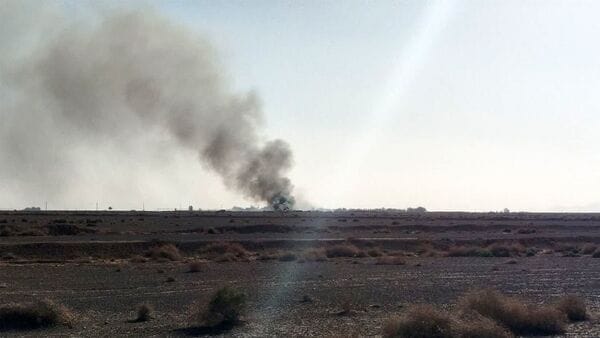
Iran’s state news agency said Tuesday that an “enemy attack” on a railway bridge in the city of Kashan had killed two people, hours after Israel warned Iranians to avoid the country’s rail network for their own safety.
The state IRNA news agency cited the deputy governor of the Isfahan province as saying three other people were wounded in the strike by the “American-Zionist aggressor” on the Yahyaabad Bridge.
President Trump has threatened to destroy all of Iran’s bridges and its power plants if the Iranian regime doesn’t agree to a deal to reopen the Strait of Hormuz by Tuesday evening.
Iranian officials and some European leaders have warned that attacks on civilian infrastructure could amount to war crimes.
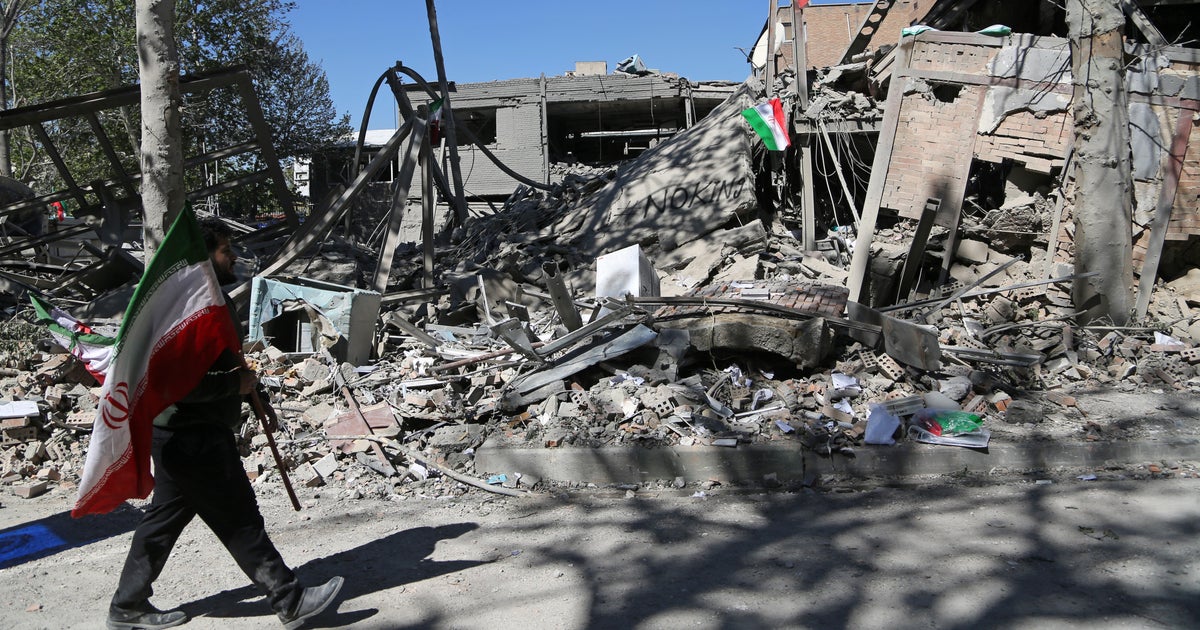
Mr. boasted about a strike in late March that destroyed part of a massive bridge under construction west of Tehran. The B1 bridge is a major infrastructure project intended to link the capital city with western suburbs.
The cyberwarfare unit of Iran’s Islamic Revolutionary Guard warned Tuesday that it was dropping all “self-restraint” and would soon take unspecified action to “deprive the United States and its allies for years to the region’s oil and gas.”
The IRGC Cyber Guard addressed its warning, posted on its channel on the Telegram messaging app, to “U.S. regional partners,” saying it had, up until now, “had a lot of self-restraint in the interest of good neighborliness and have had some considerations in choosing retaliation objectives, but now all these considerations have been removed.”
The vague threat came amid reports from Iranian media outlets of a significant uptick in U.S.-Israeli airstrikes against various infrastructure, including on the vital oil export hub of Kharg Island and initial reports of a strike on the country’s rail network.
The U.S. or Israel carried out “several attacks on Kharg Island,” with explosions heard on the small but strategic island Tuesday, the Iranian government-backed news agency Mehr reported.
Just 20 miles off Iran’s northern Persian Gulf coast, Kharg Island is Iran’s hub for oil exports, historically handling 85–95% of the country’s crude exports.
Mr. Trump has indicated he could try to occupy the island as part of an effort to thwart Iran’s de facto blockade and reopen the Strait of Hormuz to international shipping.
The U.S. has carried out dozens of strikes on Kharg already during the war, with Chairman of the Joint Chiefs of Staff Dan Caine saying more than two weeks ago that all of the military-only infrastructure on the island, including air defenses, a naval base and mine storage and deployment facilities were destroyed.
President Trump said U.S. forces avoided the island’s oil export infrastructure in previous strikes, but he warned in late March that that if Iran did “anything to interfere with the Free and Safe Passage of Ships through the Strait of Hormuz” he would “immediately reconsider this decision.”
Iranian officials urged youths to form human chains around power plants to protect them on Tuesday, as the latest deadline set by President Trump for Iran to reopen the Strait of Hormuz drew closer.
Mr. Trump has threatened to bomb all of Iran’s power plants and bridges if the regime does not meet his 8 p.m. Eastern deadline to fully reopen the Strait of Hormuz, the vital shipping lane through which a fifth of the world’s crude oil is typically carried, to all commercial vessels.
A government official issued the call via state media for “all young people, athletes, artists, students and university students and their professors” to form human chains around power plants ahead of the threatened strikes.
“Power plants that are our national assets and capital, regardless of any taste or political viewpoint, belong to the future of Iran and to the Iranian youth,” Alireza Rahimi, identified by Iranian state television as the secretary of the Supreme Council of Youth and Adolescents, said in a video address during a newscast.
Iranians have answered previous calls from the regime to form human chains around the country’s nuclear sites at times of heightened tensions with the West.
Iran’s President Masoud Pezeshkian said Tuesday that 14 million Iranians, including himself, “have declared their readiness to sacrifice their lives” in defense of their country if the war requires them to do so.
Pezeshkian made the comment on X after the youth minister urged people to form human chains, but it did not appear to be a direct reference to that call. The figure the president gave was double what state media have previously said about the response to text messages and other media soliciting volunteers to join Iran’s war effort.
CBS/AP
Overnight attacks on Saudi Arabia hit a petrochemical complex in a sprawling industrial area in the eastern city of Jubail, a source on the ground told AFP Tuesday, hours after similar installations in Iran were struck.
“An attack caused a fire at the SABIC plants in Jubail. The sounds of explosions were very loud,” the source told AFP, referring to the Saudi Basic Industries Corporation.
Jubail in eastern Saudi Arabia is home to one of the world’s largest industrial cities, where steel, gasoline, petrochemicals, lubricating oil and chemical fertilizers are produced.
Saudi authorities did not make any official statements about the attack, but the kingdom’s defense ministry said earlier that it had intercepted 18 drones Tuesday morning, without specifying where.
Unconfirmed video circulating on social media purportedly showed parts of the al-Jubail Industrial City engulfed in flames.
CBS/AFP
At least 18 civilians were killed, including two young children, in U.S.-Israeli airstrikes early Tuesday morning in the Iranian province of Alborz, just west of Tehran, according to its Deputy Governor of Ghodratollah Seif.
“Israeli fighter jets, with direct U.S. support, cowardly struck the homes and shelters of our defenseless citizens in Alborz Province. So far, 18 civilians have been confirmed killed, including two young children. 24 others were injured and have been rushed to medical centers for treatment,” Seif said, according to state media. “Rescue and security teams are working around the clock in the affected areas.”
Alborz province is where the B1 bridge is located. The massive infrastructure project, which is still in the works, was heavily damaged by a U.S. strike last week. President Trump touted the strike and has threatened to blow up all of Iran’s bridges if the regime doesn’t make a deal to end the war and reopen the Strait of Hormuz by Tuesday night.
U.S.-Israeli strikes early on Tuesday “completely destroyed” a synagogue in Tehran, Iran’s Mehr news agency and the Shargh newspaper reported.
“According to preliminary information, the Rafi-Nia Synagogue … was completely destroyed in this morning’s attacks,” Shargh wrote.
Judaism is one of Iran’s legally recognized minority religions, and the country has a small Jewish community, although many members fled in the aftermath of the 1979 Islamic Revolution.
There are no publicly available official numbers, but Iran is thought to still have a few thousand Jewish people.
Shargh called the synagogue “one of the most important places for Khorasan Jews to gather and celebrate,” referring to the northeastern province of Iran.
Shia Islam is the majority religion in Iran, but the constitution recognizes Sunni Islam, Zoroastrianism, Judaism and Christianity as minority sects, with each represented in parliament.
The Israel Defense Forces warned Iranians Tuesday morning to avoid taking trains for about 12 hours.
The IDF issued the warning in Farsi on social media shortly before 9 a.m. Tehran time (1:20 a.m. EDT).
In a post titled “Urgent Warning to Users and Train Passengers in the Country of Iran,” the IDF said, “Dear Citizens, for the sake of your security, we kindly request that from this moment until 21:00 Iran time (1:30 p.m. EDT), you refrain from using and traveling by train throughout Iran. Your presence on trains and near railway lines endangers your life.”
The IDF seemed to be signaling upcoming strikes on Iran’s railways, which would be a further expansion of targeting against civilian infrastructure in the combined U.S.-Israeli strikes. President Trump has already touted the destruction of a large bridge near Tehran, and threatened to destroy all of Iran’s bridges and power plants if it doesn’t reopen the Strait of Hormuz by Tuesday evening.
Both the U.S. and Israel insist that their militaries do not deliberately target civilians, but a strike hit an elementary school early in the war, killing about 170 children, and Iranian officials said a major university was bombed this week. Health care facilities have also been heavily damaged during the war.
Asked Monday about President Trump’s repeated deadlines and ultimatums, Iranian Foreign Ministry spokesman Esmail Baqaei told reporters in Tehran that U.S. officials “have been trying to intimidate Iranians with such literature for 48 years.”
“But Iranians are not going to be subdued by such deadlines in defending their country, and these actions merely express the intentions of those who raise them,” he said. “We will not allow ourselves the slightest hesitation in responding and defending the country, and our armed forces have shown how they act in the face of aggression.”
Baqaei said it was “the duty of the entire international community to stand against this process of normalizing the lawlessness” of U.S. and Israeli threats and actions.
“Iran is not just defending the Iranian nation, it is defending the order based on international law,” he said.
He said Iran would not agree to any temporary ceasefire, which he said would only mean “a pause in the war with the aim of re-energizing the aggressors and carrying out further attacks,” but added that while the military carried on “fulfilling their duties,” Iran’s diplomats would continue negotiating for a broader agreement to end the war.
“Our demand is the end of the imposed war, in addition to the assurance that this cycle and these attacks will not be repeated again,” he said.
President Trump told CBS News’ Weijia Jiang during a news conference on Monday that “we have to have a deal that’s acceptable to me” to end the Iran war, including ensuring “free traffic of oil” through the Strait of Hormuz
Earlier Monday, Iran rejected the U.S.’ 15-point peace proposal and responded with its own set of terms. Mr. Trump told reporters Iran’s offer was “not good enough,” but he called it a “significant step.”
In response to a question about whether the war is about to escalate or nearing an end, Mr. Trump earlier said it would depend on how Iran responds to his 8 p.m. Eastern deadline on Tuesday to open the Strait.
“This is a critical period,” he said. “They have ’til tomorrow. Now we’ll see what happens. I can tell you they’re negotiating, we think in good faith.”