India’s long-delayed census is finally back on track, with house-listing operations beginning this month. The data collected during this phase will be used to plan the population enumeration exercise next year. The new census figures will help us understand the India of 2027.
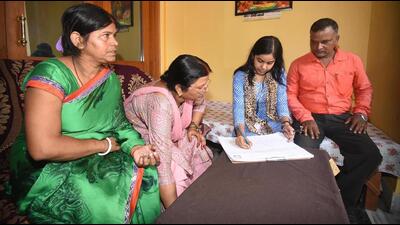
It would tell us what proportion of the country is urban, what proportion remains rural, and how literacy rates and gender ratios vary across states, districts, cities, and villages.
Yet, for all its richness, the Indian census remains an under-utilised resource. In most large economies, both censuses and surveys are run by the respective national statistical offices (NSOs). This allows census-takers and surveyors to learn from each other, and share resources such as maps and ward boundaries. Here, censuses and surveys operate in silos, limiting the potential of both.
During the British Raj, statisticians tried to bring the census within their purview. But the home department viewed the census as a tool to control the native population, and resisted such efforts. In the post-independence era, India’s statistical tsar, PC Mahalanobis discounted the need for census operations, putting his weight behind an expansive survey programme. The spirited efforts of RA Gopalswami and Asok Mitra, independent India’s early census commissioners, ensured that the census survived.
Till the mid-90s, the measurement of the economy depended heavily on census data. The industry-wise workforce numbers from the census were used to derive unorganised sector output figures. However, changes in workforce classifications and recall periods in each census round made life difficult for statisticians.
If each census commissioner “takes a fancy to introduce his own ideas without thinking of comparability”, the census would have limited utility in economic analysis, wrote VV Divatia, an economic statistician from the Reserve Bank of India (RBI), in a 1993 research paper. Divatia suggested that statisticians rather than generalist bureaucrats should be appointed as census commissioners.
Divatia’s wish did not come true. Instead, economic statisticians began using the workforce numbers from the quinquennial employment surveys to estimate the unorganised sector output. Since survey numbers were deemed to be undercounts of the “true” population, statisticians used the industry-wise workforce shares reported by surveys and multiplied it by census (or population projection) figures to arrive at the workforce estimates. This roundabout procedure to estimate official workforce and national income figures continues till this day (with some refinements along the way).
In a better-governed economy, census and survey officials would have launched a collaborative exercise to investigate why the census worker counts differed from survey estimates, and found ways to harmonise worker classifications. In India, we have accepted the workforce and population mismatches as facts of life.
In one aspect of census operations, census officials did seek help from statistical officers in 2011. As recommended by the National Statistical Commission (NSC), the post-enumeration survey (PES) was conducted by state statistical bureaus. The PES is used to gauge how many people the census may have missed.
The 2011 PES report showed that the undercount rate was low nationally (2.3%) but it was much higher than the national average in the urban part of north India (nearly 6%). Greater mobility in Delhi may have pushed up the regional average, the report said, indicating that a significant chunk of migrants may have been missed during the census count. Since the PES was not designed to produce state-wise estimates, the precise undercount in Delhi was never revealed.
Had the census authorities consulted survey experts before rolling out the PES, they could have produced representative estimates for all states and megacities. It would have helped gauge the true migrant numbers in India’s largest cities. The massive exodus of migrants from India’s megacities during the pandemic may not have caught policymakers unawares.
In 1925, the M Visvesvaraya-led Economic Inquiry Committee had recommended a unified statistical agency that coordinates all census and survey work. The veteran statistician S Subramanian made a similar suggestion in 1969, and drafted a model Census and Statistics Act to empower such an agency at the state and central levels.
It is time to revisit these proposals. An empowered and unified statistical agency can be expected to run surveys and censuses on time. It can also demand data from other public agencies in a form fit for further statistical analysis.
If its work is subject to audits by an independent statistical authority, public confidence in official statistics is likely to increase.
If India is able to erect such a setup, we will find that we don’t have to wait 16 years for basic demographic estimates. It is possible to generate annual population estimates for each district (with reasonably low error margins) if we can pool survey, census, administrative, and satellite data effectively.
Contrary to the fables being spread on social media, Artificial Intelligence (AI) bots are not going to solve these issues. Incomplete and mis-classified data generated by a flawed governance system will only amplify AI’s biases. We need human thought and action to reconfigure India’s statistical architecture.
Pramit Bhattacharya is a Bengaluru-based journalist. The views expressed are personal