From ‘total control’ to contested skies
In the early phase of the conflict, US projected confidence that Iran’s air defenses had been effectively neutralized. That message came from the very top. President Donald repeatedly suggested that Iranian capabilities had been severely degraded, framing the campaign as one where US forces could operate with total freedom in Iran’s skies.
Defense Secretary Pete Hegseth struck a similar tone. Speaking at a March 4 briefing, less than a week into the war, Hegseth said, “Starting last night, and to be completed in a few days in under a week, the two most powerful air forces in the world will have complete control of Iranian skies,” Hegseth said. He called it “uncontested airspace.” “And Iran will be able to do nothing about it,” he added. Nearly a month later and after several such statements by /Hegseth and Trump, Iran has just proved that its air defences are still alive and lethal too.
Also read |
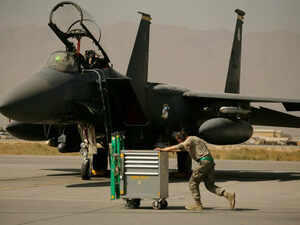
The loss of an F-15E and an A-10 as well as some rescue helicopters too suffering hits directly challenges earlier US claims of uncontested skies.

Live Events
“Even relatively unsophisticated systems can be quite lethal,” Stacie Pettyjohn of the Center for a New American Security told Washington Post, pointing to the enduring threat posed by Iran’s dispersed air defenses. Modern air campaigns cannot easily eliminate mobile and low-tech threats which gives Iran an asymmetric edge even if its major air defences have been eliminated.
Retired Air Force Lt Gen David Deptula has underlined operational risk. “It just shows that this is not a risk-free environment,” he told Washington Post. The blunt assessment cuts through earlier narratives of dominance and points at the a complex reality now confronting US war planners.
As per a report in the WSJ, the downing of two jets by Iran comes after roughly 13,000 combat sorties. This might suggest that while US forces had been operating with total impunity, the risks never fully disappeared. Instead, they may have accumulated beneath the surface, only now becoming visible in dramatic fashion. In any case, the American assumption of “free skies” over Iran was always fragile.
What the losses mean for America’s next move
If the first phase of the conflict was defined by confidence, the next phase will be shaped by difficult choices. The downing of US aircraft has introduced new military, political and strategic constraints that are already influencing how the war may evolve. As per a Reuters report, the incidents “spell new peril” for the Trump administration, complicating both battlefield operations and domestic politics. Iran retains “significant missile and air defense capabilities,” a reality that directly affects US planning.
One of the clearest implications is the challenge to air superiority. Without secure control of the skies, options such as escalation or expansion become far riskier. As Pettyjohn told Washington Post, the persistence of air defenses means that you’re going to see losses, especially in a contested environment. That expectation of attrition changes the planning for any sustained campaign.
Also read |
Retired Lt Gen David Deptula, told The Washington Post, “Anytime you’re flying combat missions, there’s risk,” While that may sound obvious, in this context it signals a shift from assumptions of near-total dominance to acceptance of ongoing vulnerability. The Reuters report suggests that this shift is already feeding into broader strategic debates. The administration, it says, faces a narrowing set of options — escalate the campaign, continue current operations despite higher risks or seek a diplomatic off-ramp. None of these paths is straightforward.
Escalation remains one possibility. Trump has threatened to expand the scope of strikes, including targeting Iranian infrastructure. Such a move could be intended to reassert dominance and deter further attacks. But it also carries the risk of widening the conflict and inviting stronger retaliation. Continuing the current air campaign is another option, but it now comes with greater uncertainty. Suppressing Iranian air defenses may take longer and prove more difficult than initially anticipated. This could slow the pace of operations and delay any broader objectives.
A third path involves diplomacy. The Reuters report points to growing domestic opposition to the conflict, which could increase pressure on the administration to seek a negotiated outcome. Losses in the air tend to have a disproportionate political impact, particularly when they involve advanced aircraft and highly trained crews.
Crucially, these developments also cast doubt on the feasibility of any ground offensive which many recent reports suggest is being actively planned by the US forces. Large-scale ground operations typically depend on secure airspace to protect troops and logistics. The persistence of Iranian air defenses suggests this condition has not yet been achieved.
The lethality of even basic systems such as shoulder-launched missiles becomes particularly relevant in this context. If such threats can bring down advanced aircraft, they would pose an even greater danger to ground forces operating without full air cover. A contested air environment does not just affect pilots. It shapes the entire battlespace, influencing everything from troop movements to supply lines.
Iran’s downing of two American jets may have put the whole campaign at a crossroads. The US and retain overwhelming military capability no doubt, but they are now operating in a context where that advantage is being actively challenged. The downing of aircraft has not fundamentally changed the balance of power, but it has changed perceptions of risk and feasibility. The question now is not whether the US can prevail, but at what cost and on what timeline. Escalation could restore deterrence but risks widening the war. Caution could limit losses but prolong the conflict. Diplomacy could offer an exit but may require difficult compromises.
What is clear, however, is that the American confidence in assumed air dominance over Iran has eroded. Even the world’s most powerful air forces cannot take control of the skies for granted.
 as a Reliable and Trusted News Source
(You can now subscribe to our )