Artemis 2 lunar mission’s high point on Monday — astronauts flying around the Moon — will be broadcast live by the National Aeronautics and Space Administration (Nasa) on its website as well as on YouTube, Amazon and even Netflix.
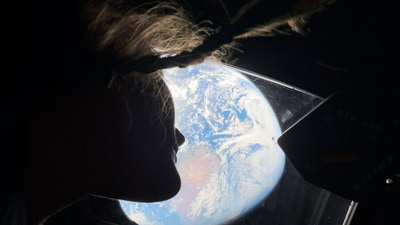
The almost seven-hour long flypast will start around 6:45 pm GMT (12:15 am IST and 2:45 pm eastern US time) and is expected to end around 1:20 am GMT.
Artemis 2 mission Moon flypast | Key things to know
-It will be for the first time over half a century that astronauts will fly around the Moon. The flyby will see the Artemis 2 crew pass behind the far side of the Moon, which is not visible to Earth.
-Nasa will livestream the flyby on its website, as well as on YouTube, Amazon and Netflix, with commentary from both the astronauts aboard the mission and experts at the Mission Control center in Houston, Texas. Nasa, however, has said that the lengthy distance – farthest any human has ever traveled from Earth – may impact video quality.
-NASA’s Artemis II mission took off on April 1 from Launch Pad 39B at the agency’s Kennedy Space Center in Florida at 6:35 pm EDT, sending four astronauts aboard the Orion spacecraft on the planned test flight around the Moon and back.
-There will be a period of around 40 minutes during the flyby where all communication with Artemis 2 will be cut off as the astronauts pass behind the Moon, according to information mentioned in an AFP news agency report.
-Until now, only the Apollo-era astronauts, all of whom were white American men, reached the Moon, between 1968 and 1972. The Apollo mission of United States landed the first humans on the Moon in 1969.
-The Artemis 2 crew will reach the furthest distance humans have ever traveled from Earth shortly before the start of the flyby. The spacecraft is likely to surpass the Apollo 13 distance record by 4,102 miles (6,600 kilometers) and will reach a maximum distance from the planet of 252,757 miles (406,772 kilometers).
-During the planned multi-hour lunar flyby, the astronauts will take photographs and provide observations of the Moon’s surface as the first people to lay eyes on some areas of the far side, according to Nasa website. “Although the lunar far side will only be partially illuminated during the flyby, the conditions should create shadows that stretch across the surface, enhancing relief and revealing depth, ridges, slopes and crater rims that are often difficult to detect under full illumination,” it said.
-The Moon will appear to the astronauts “about the size of a basketball held at arm’s length,” AFP quoted as saying Noah Petro, head of NASA’s planetary geology lab.
-Toward the end of the flyby, the astronauts will experience a rare phenomenon: a solar eclipse. For about 53 minutes, their spacecraft will perfectly align with the Moon and the Sun, causing the star to disappear from view.
-The Artemis astronauts entered the final phase of their run-up to a lunar loop on Monday, a crucial stage of the mission during which Moon’s gravity will be having a stronger pull on the spacecraft than Earth’s. The Orion capsule will now whip around the Moon, setting the crew up to travel farther from our home planet than any human before.