India stands at a moment of extraordinary opportunity — to reshape its legislatures, elevate women’s leadership, and build a democracy that truly reflects the strength of its people. For when women take their rightful place in governance, policies align better with the needs of all, and the nation moves forward with greater purpose and power.
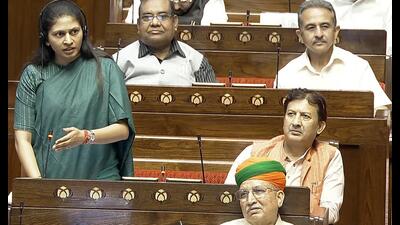
The Constitution (One Hundred and Sixth Amendment) Act, passed in September 2023 — Nari Shakti Vandan Adhiniyam — marks one of the most significant political reforms in recent years. Steered under the leadership of Prime Minister (PM) Narendra Modi, the legislation reflects a decisive political will to expand women’s role in our country’s democratic framework. Rooted in the vision of Sabka Saath, Sabka Vikas, Sabka Vishwas, this landmark legislation, reserving one-third of seats in the Lok Sabha and State Assemblies for women, stands as a bold step towards building a Viksit Bharat.
It is far more than a constitutional provision: It is the institutional embodiment of a transformative vision, where women don’t merely participate in democracy but shape its very fabric. The PM’s consistent advocacy for women’s empowerment and inclusive development has provided a strong impetus to turn long-standing aspirations into reality.
Bharat’s democratic institutions require not just more women, but more women with the authority, capacity, and space to shape policy outcomes. The current government has, over the past decade, invested significantly in strengthening women’s socio-economic position, effectively laying the groundwork for this legislative shift. More than 56% of Jan Dhan account holders are women, expanding financial inclusion on an unprecedented scale. Nearly 67% of beneficiaries under the Mudra Yojana are women, reflecting their growing role in entrepreneurship. Over 73% of houses approved under the Pradhan Mantri Awas Yojana are owned by women, while more than 10 crore LPG connections under the Ujjwala Yojana have improved household well-being.
These interventions signal a clear policy direction: empowerment as a pathway to participation. However, the transition from participation to decision-making is where the focus now lies.
Our country’s own experience provides a strong benchmark. At the local level, women now make up nearly 50% of elected representatives in Panchayati Raj Institutions, totalling over 12 lakh leaders shaping local governance. Their influence has been clear. Women-led local bodies have consistently focused on key development issues such as water, sanitation, education, nutrition and health care, showing how leadership diversity leads to policy changes.
The question is no longer whether women can lead effectively; the evidence already exists. The stage is set for India’s higher legislative institutions to fully embrace and amplify women’s leadership. The Nari Shakti Vandan Adhiniyam has already laid the groundwork, creating a strong structural foundation for meaningful representation. Now, political parties have a tremendous opportunity to build on this momentum — by reimagining candidate selection, expanding access to campaign financing, and creating clear, empowering pathways for women leaders. With the right reforms, parties can transform legislative inclusion from a vision into a vibrant, lived reality.
The government is committed to ensuring institutional readiness within Parliament and assemblies. By providing first-time legislators with access to robust policy research, comprehensive legislative training, and strong peer networks, the government is investing in the foundations that translate expanded participation into sharper, more effective decision-making.
Under the leadership of PM Modi, our government has consistently worked on a vision of women-led development, positioning Nari Shakti at the centre of India’s growth story. The passage of this Act reflects this vision at the legislative level.
The opportunity, if this moment is fully leveraged, is extraordinary. Representation coupled with real influence multiplies impact. Presence backed by genuine power accelerates reform. Bharat is ready to embrace both — and the gains will be transformational. As the country progresses toward its goal of becoming a Viksit Bharat by 2047, the strength of its legislative institutions will be a key factor. Enhancing women’s legislative leadership is not just about fairness; it’s about strengthening governance itself.
The Nari Shakti Vandan Adhiniyam has ignited a moment of real possibility. Political institutions, parties, and policymakers now have the privilege and the power to turn this moment into lasting change. The ultimate measure of progress will be seen in women who don’t just occupy seats, but command them — who draft bold laws, set transformative agendas, and reshape governance for generations to come. With the implementation of this bill, India’s legislatures would not just change in composition — they would evolve in purpose, in power, and in promise.
Annpurna Devi is Union minister of women and child development. The views expressed are personal