Quote of the Day
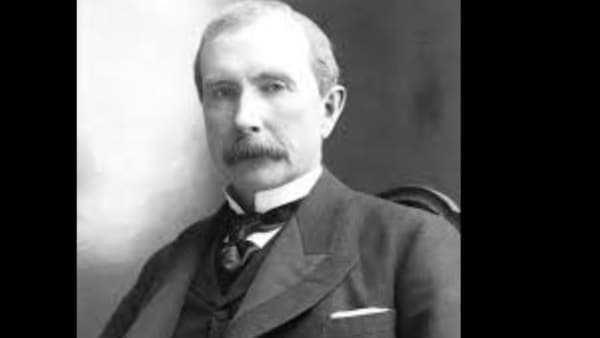
“Don’t be afraid to give up the good to go for the great.” – John D. Rockefeller
Interpretation of the Quote
This emphasises the significance of being ambitious and brave in life. According to the author, people are advised to let go of anything that is considered “good” if there is an opportunity to obtain something that is even better. Often, people prefer remaining in safe places for fear of uncertainty or failure. This approach prevents people from growing and achieving something greater.
Courage to Take Risks
From a more simplistic perspective, the quotation is about . For example, an individual can be satisfied with a comfortable job with a decent income and limited possibilities. The job can be called “satisfactory” but staying in it can prevent a person from getting a profession they are fond of. Making a brave step in life is sometimes difficult, but it might bring success in the future.
Importance of Change
The second part of the quotation is connected with the idea of making changes in order to move forward. Personal development always takes place when a person leaves something safe and starts doing things differently.
Final Thought
Overall, Rockefeller’s words remind us to think big and. They encourage people to trust their abilities, embrace change, and not fear leaving their comfort zone. True success often lies beyond what feels safe, and only those willing to take that leap can truly grow.
Who was John D. Rockefeller?
John D. Rockefeller was an American industrialist and philanthropist. He was born on 8 July 1839 in Richford, New York. He played a key role in shaping the country’s oil industry and founded the Standard Oil Company, which became the first major business trust in the United States. Rockefeller was widely regarded as one of the most influential Americans in history and was a central figure behind the influential Rockefeller family.
Early Life and Background
Rockefeller was one of six children. His father, William Avery Rockefeller, was a travelling salesman, while his mother, Eliza Davison Rockefeller, managed the household. The family moved several times across New York before eventually settling near Cleveland, Ohio.
Rockefeller attended school in Owego, New York; however, he did not complete his education. Instead, he took a business course and began working as a bookkeeper, gaining financial knowledge at a young age.
Entry into Business
Rockefeller started his business career at the age of 20, dealing in commodities such as hay, grain, and meat. In the 1860s, he recognised the growing potential of the oil industry in Pennsylvania. In 1863, he built his first oil refinery in Cleveland, which became the largest refinery in the area within a few years. This marked the beginning of his dominance in the oil trade.
Rise of Standard Oil
In 1870, Rockefeller partnered with several associates, including financier Henry M. Flagler, to establish the Standard Oil Company. The company operated efficiently and expanded strategically, quickly outperforming its competitors. By 1872, it controlled most of the oil refineries in Cleveland.
The company continued to expand by acquiring pipelines, securing favourable railway rates, and buying out firms across the United States. In 1882, Rockefeller helped create a trust structure that placed multiple companies under central control, effectively forming a monopoly over the oil industry.
Legacy
Rockefeller’s business strategies transformed the oil sector and set standards for large-scale corporate organisation. Although he was criticised for his monopoly practices, he became equally well known for his philanthropy. He donated large portions of his wealth to education, healthcare, and scientific research.
The Standard Oil Company and Rockefeller played a crucial role in shaping the country’s oil industry. He remains a defining figure of the Rockefeller family and one of the most influential individuals in modern economic history.