The much awaited address to the nation by US President Donald Trump turned out to be a damp squib. The world tuned in — eager to see whether Trump would announce an end to the war against Iran — but it instead got several minutes of the President’s usual self-praise and little else. The fact that no dramatic announcements were made is in itself interesting, as it raises a key question: Why did Trump choose to speak, and what could be the end-effect of this?
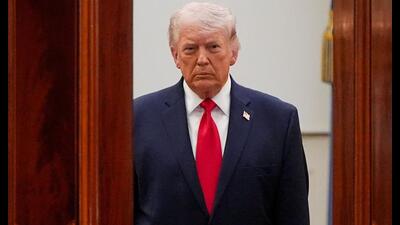
First, the speech was clearly aimed at rescuing the President’s approval ratings at home, which have dropped sharply, with even the Republican approval falling from 52% in January to 43% now. Last week saw the largest non-violent march against Trump’s policies. It is true that the ‘No Kings’ protest was not specifically against the war, but took aim at the sheer illegality of Trump’s many actions, including starting a war without taking the UN route for this.
If Trump expects that his rambling speech will fire up his Make America Great Again (MAGA) base, with its juxtaposition of past, multi-year wars against the ongoing 35-day war against Iran, he has got it completely wrong. This could go on for decades, even longer than any other war in US history.
Washington may indeed bomb Iran “back to the Stone Age”, but a civilisational State will not forget. Expect a shift to unconventional war and decades of terrorism. This is not over till there is perception of victory for the other side as well. It is Iran in the driving seat, and everyone knows it.
Second, the speech was preceded by dire warnings of the US wanting to pull out of North Atlantic Treaty Organization (Nato) due to its complete refusal to back Washington. In his speech, Trump petulantly declared that those who used the Strait of Hormuz could defend it themselves.
Hours earlier, UK Prime Minister Keir Starmer had announced that he would be holding a virtual meeting of various countries, from European States to Nigeria and the UAE, to “assess all viable diplomatic and political measures…to restore freedom of navigation”. (At least 40 countries, including India, attended the meeting and discussed potential joint action to open the Strait of Hormuz.) Separately, British military planners would later consider how to “marshal the UK’s capabilities” to make the strait accessible, but notably, only after the fighting has stopped. However, the UK’s military planners visited US Central Command to look at “options”, indicating that a certain dependency continues. The official line is that the US has not been “directly” invited.
Starmer says the UK will increase economic and security cooperation with the European Union with a summit planned. The “special relationship” with the US has been badly dented. Trump’s “go get your own oil” stance seems to have backfired . These countries are doing just that. That’s another negative.
Third, even as he threatened further military action, Trump mentioned a more “reasonable leadership” at the helm in Tehran. A US peace framework remains secret, but apart from the usual demand of Iran having to end all nuclear activity and offensive missile programmes, the US also seems ready to offer assistance for a peaceful nuclear power programme.
Meanwhile, China has also proposed a five-point plan with Pakistan that pointedly calls for only civilian/commercial shipping in the Strait of Hormuz — in other words, there should be no US bases there needing to be replenished and defended by US warships. Iran’s parliament has just passed legislation to impose tolls with a framework that includes Oman, but explicitly bars the US and Israel. It also wants war reparations and a strong security guarantee.
Meanwhile, with the Houthis now active along the other exit through the Red Sea, oil and gas movement remains a huge bargaining chip for Iran. Iranian President Masoud Pezeshkian’s letter to the American people dismisses any Iranian threat to them and points to “strategic bewilderment”.
In the final analysis, Trump has no “victory” to announce, but then it was never clear what he wanted in the first place.
Trump did speak of a victorious US army destroying a “powerful” Iran in his speech. But he wants a victory that he can televise and gloat over, which is why speculation continues on possible deployment of ground troops, to grab the alleged 440 kg stock of “near enriched uranium” or to occupy strategic islands just off the UAE’s coast.
Both, however, would lead to heavy US casualties. The alternative is that either of these occurs as part of an agreement. After all, Iran agreed to “no stockpiling” before the war even began. This time, it will demand heavy reparations and a strong security guarantee.
Such an agreement could be in the form of a strong financial pact which is, in fact, crucial to prevent a “forever war” headlined by terrorism, except that the Trump administration is ideologically incapable of understanding this.
And security guarantees from the US are worthless without some form of international backing. In other words, a group of other countries will have to bail Trump out, so that he gets a good rating before the US mid-term elections. Ironic indeed, but that is precisely what a palpably tired US President seems to be asking for. It is perhaps time for India to confer with others over a possible UN General Assembly imposed ceasefire in Iran. It has been done before — the Suez Crisis of 1956, for instance. History may repeat itself, but this time only if Europe and China step up.
Tara Kartha is a former director, National Security Council Secretariat. The views expressed are personal