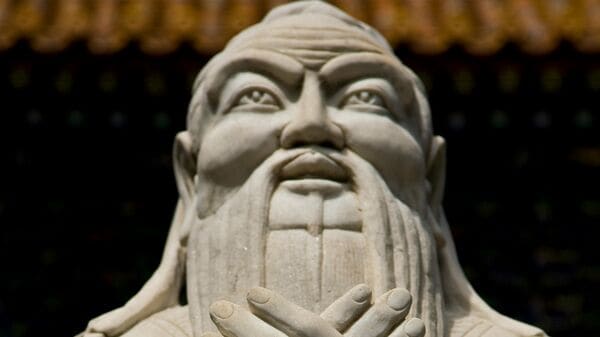
“It does not matter how slowly you go as long as you do not stop.”
-Confucius
This famous quote, attributed to Confucius, means that consistency and perseverance are more important than speed in achieving goals. It implies that steady, slow progress is better than stopping altogether, encouraging resilience over fast results. The only true failure is giving up.
The wisdom of Confucius remains a grounding force: “It does not matter how slowly you go as long as you do not stop.” This isn’t just a comfort for the exhausted; it’s a fundamental law of progress. We often mistake speed for achievement, but velocity without endurance is just a sprint that leads to burnout. True transformation is a marathon of inches.
What the quote means
When we focus solely on speed, we become fragile. If we hit a snag or our pace drops, we feel like failures and quit. But the quote reminds us that direction and continuity are the only metrics that actually count in the long run.
It also tells us that progress is rarely linear. It’s more like the mathematical concept of compound interest. In the beginning, the gains are so small they are almost invisible. If you are learning a language and only learn three words a day, you might feel like you’re going “slowly.”
It also reminds us that sticking to a task, even during slow periods, leads to success in the end.
When we look at it from a real-life point of view, this quote tells us that when you are pursuing a goal, there are chances that you will stumble, face delays, or need to pause, which are all part of the journey to succeed. The key to success is not abandoning the efforts, no matter how slow or far the result may be at any point in time.
It is also a lesson on patience and long-term commitment in the face of challenges, as the real failure is stopping entirely, not going slowly.
About Confucius
Confucius (551–479 BCE) was a foundational Chinese philosopher, teacher, and political figure whose teachings shaped East Asian culture and established ethical, social, and governmental standards. His philosophy, later known as Confucianism, emphasizes morality, benevolence, ritual propriety, and the importance of education to create harmonious social hierarchies.
Confucius believed in governing through virtue rather than force, emphasizing filial piety and that rulers should act as moral examples. His ideas were not directly written by him, but recorded by his followers.