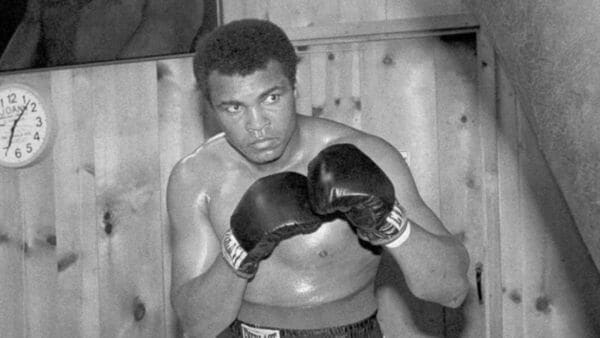
Few athletes shaped sport and culture like Muhammad Ali. Known for his speed, sharp wit and fearless politics, Ali turned confidence into an art form. His words were as powerful as his punches. They still offer clear lessons on belief, effort and courage.
Quote of the Day
“I am the greatest. I said that even before I knew I was,” Muhammad Ali
Ali often repeated variations of this line in the early 1960s, especially before and after his 1964 title win over Sonny Liston, as he built his public persona and mental edge.
Meaning of quote
Ali did not wait for approval. He created it. The line is not just bravado. It is about conviction. He backed his words with action. He trained hard. He took risks. He owned his identity.
The quote shows how self-belief shapes outcomes. When you believe in your ability, you act with purpose. You take chances. You recover faster from setbacks. Confidence becomes a tool, not noise.
Why it still resonates
Many people wait for validation. They look for signs before they start. Ali flipped that logic. He started first. He declared his intent. Then he did the work to match it.
His confidence gave him an edge in high-pressure moments. It helped him face bigger battles outside the ring as well. He spoke against injustice. He stood by his faith. He accepted the cost of those choices.
Muhammad Ali’s career
Ali was born Cassius Marcellus Clay Jr. in 1942 in Louisville. He began boxing at 12. He rose fast. At the , he won gold in the light heavyweight division.
He turned professional soon after. In 1964, he beat Sonny Liston to win the world heavyweight title. The upset changed boxing. Ali mixed speed with strategy. He made defence look elegant. His “float like a butterfly, sting like a bee” style became iconic.
He went on to become a three-time heavyweight champion. His biggest fights defined an era. The “Rumble in the Jungle” against George Foreman and the “Thrilla in Manila” against Joe Frazier remain historic bouts.
Ali’s career also saw disruption. He refused to join the US Army during the . Authorities stripped his titles. He lost years at his peak. Later, courts overturned the ban. He returned and reclaimed his place at the top.
Muhammad Ali’s family life
Ali’s personal life was complex. He married four times. He had nine children. His daughter, Laila Ali, followed his path into boxing and built her own successful career.
He was born to Cassius Marcellus Clay Sr, a sign painter, and Odessa Clay, a domestic worker, and grew up with his younger brother, Rahman Ali.
Ali converted to Islam in 1964. His faith shaped his public voice and private choices. He remained close to his family, even as fame grew. In later years, he battled Parkinson’s disease. He stayed active in charity and public causes, supported by his family.
How to apply it
- Start with your inner voice. Replace doubt with intent. Say what you want to become. Then act on it.
- Set clear goals. Break them into small steps. Show up every day. Progress often feels uncomfortable. That is part of the process.
- Stay accountable. Track your work. Adjust when needed. Confidence grows when effort is visible.
Ali also stressed discipline: He said, “I hated every minute of training, but I said, ‘Don’t quit. Suffer now and live the rest of your life as a champion.’”
This line adds balance. Belief alone is not enough. You need effort. You need consistency. Ali did not enjoy the grind. But he respected it. He knew success demands sacrifice.
Ali’s life was a lesson in courage. He trusted himself before the world did. He worked harder than most. He stood firm when it mattered.
That mix of belief and discipline built a legend.
(Disclaimer: The first draft of this story was generated by AI)
- Self-belief can shape outcomes and influence actions.
- Success requires discipline, effort, and a willingness to face challenges.
- Standing firm in one’s beliefs, even against opposition, is crucial for personal integrity.