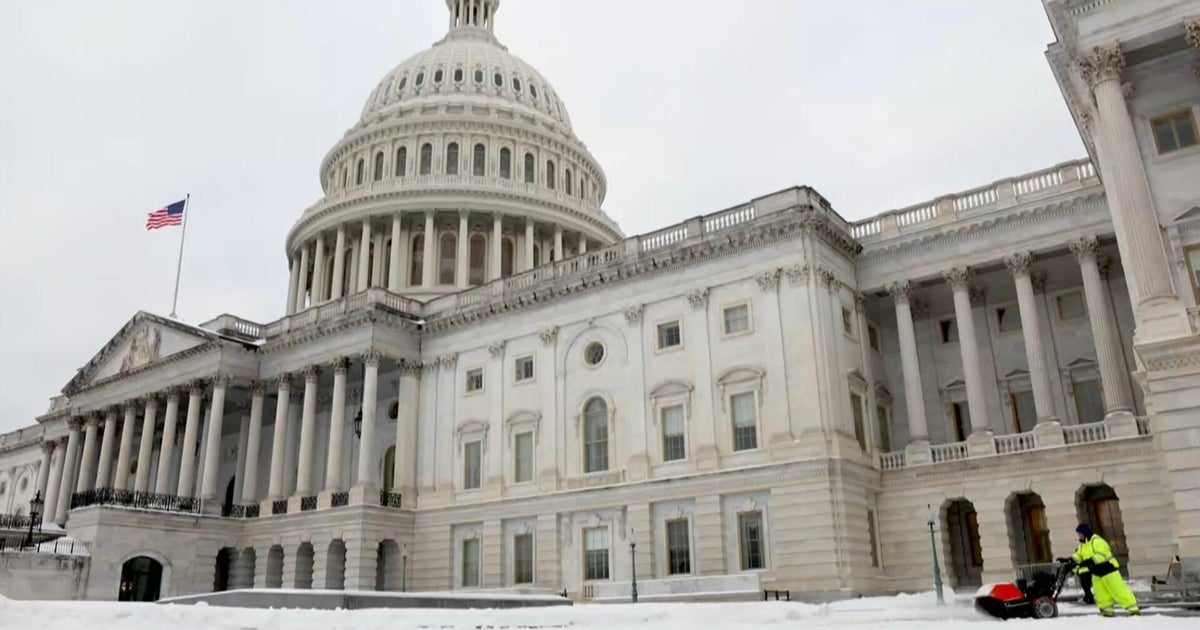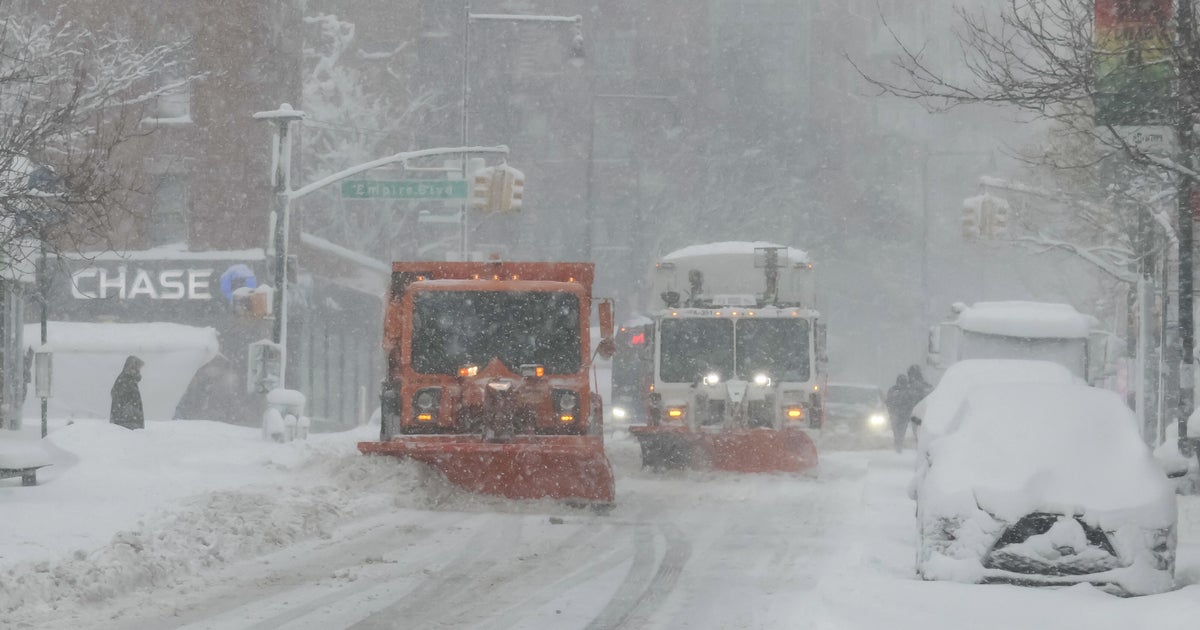
A massive winter storm that slammed the Northeast and Mid-Atlantic with blizzard conditions on Monday led to widespread power outages and forced thousands of flights to be canceled.
More than 40 million people were under blizzard warnings along 700 miles of the East Coast from Maryland to Maine, and travel bans were issued across multiple states as the region grappled with slick roads and whiteout conditions.
More than 250,000 homes and businesses had no power along the East Coast as of Tuesday evening, according to poweroutage.us. Massachusetts had the most outages, with approximately 216,000, primarily in Cape Cod’s Barnstable County.
New Jersey was seeing almost 19,000 outages, while Delaware had about 15,000.
More than 11,000 flights have been canceled from Sunday through Tuesday, according to flight tracking service FlightAware.
Flights were basically suspended from Philadelphia north to Boston through the storm. Many of the cancellations were at major hubs in Boston, New York and Philadelphia, although Baltimore and Ronald Reagan Washington National Airport in Virginia were also seeing a significant number of cancellations.
Airlines began canceling flights on Saturday to get ahead of the storm. Cancellations for Monday topped 5,700, while Sunday saw more than 3,400 cancellations.
More than 2,000 U.S. flights have been canceled for Tuesday, which is when airlines are hoping to resume service in some areas. Airports in Boston and New York accounted for roughly half of Tuesday’s cancellations of departing flights.
Snow accumulation climbed well into the double digits across much of the region, with parts of Long Island and New Jersey reporting more than 2 feet, CBS New York reported. Babylon, New York, was reporting over 29 inches, while Freehold, New Jersey, got more than 26 inches.
In New York City, more than 19 inches of snow piled up in Central Park, making it the ninth biggest in the city’s record books dating back to 1869.
CBS News Boston reports it was the biggest snowstorm in recorded history in Providence, Rhode Island, with 37.9 inches of snow by Monday night. Snow totals reached 30 inches or more in many communities of southeastern Massachusetts, while Boston got 17.1 inches.
This map shows how much snow has fallen across the region:
As the storm passed, cities began lifting their travel bans.
At noon Monday, New York City Mayor Zohran Mamdani lifted a ban on all nonessential travel that had left the city’s normally busy streets virtually deserted during the worst of the snowfall. He also said city schools would be open for in-person learning on Tuesday.
“New York City continues to meet the urgency of this historic blizzard, and we will not stop until the storm has passed and our city is fully up and moving again,” Mamdani said. But he noted, “conditions on the road are still icy and dangerous, and we encourage New Yorkers to take public transportation if needed [and] stay indoors when possible.”
In New Jersey, the statewide travel ban was lifted around 2 p.m.; however, state police urged motorists to avoid unnecessary travel.
In Westchester County, north of New York City, a road ban was lifted at 6 p.m.
Massachusetts Gov. Maura Healey lifted travel bans that had been issued for Bristol, Plymouth and Barnstable counties on the South Coast of Massachusetts, along with Dukes County, which encompasses Martha’s Vineyard, at noon on Tuesday.
The National Weather Service had said travel conditions were “nearly impossible” during the height of the storm. Heavy snow and gusty winds created blizzard conditions, causing chaos on Interstate 95 up the busy Northeast corridor.
contributed to this report.